An Overdue Honoring on Remembrance Day…

Babaji Indar Singh

Today, on this Remembrance/Veterans Day, the world celebrates and honors the fallen soldiers of the Great War. It also commemorates the day Armistice was signed that brought World War 1 to its end. In this sea of poppies, which is considered a symbol of sacrifice, I too want to recognize and pay tribute to my ancestor Subedar Indar Singh, who saw the various theatres of war fighting the Germans in Flanders & Western Front and later the Ottoman Empire in Mesopotamia.
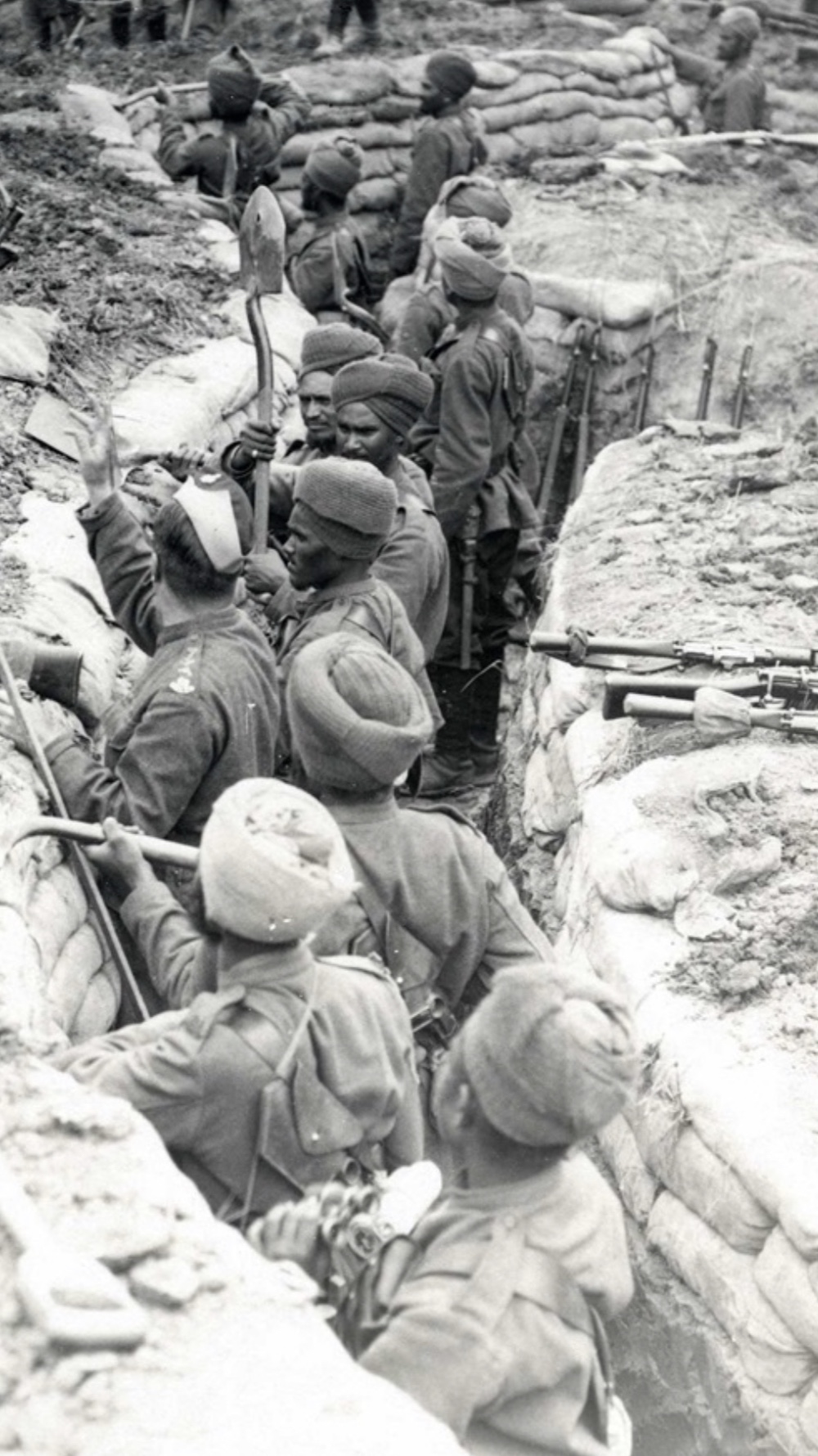


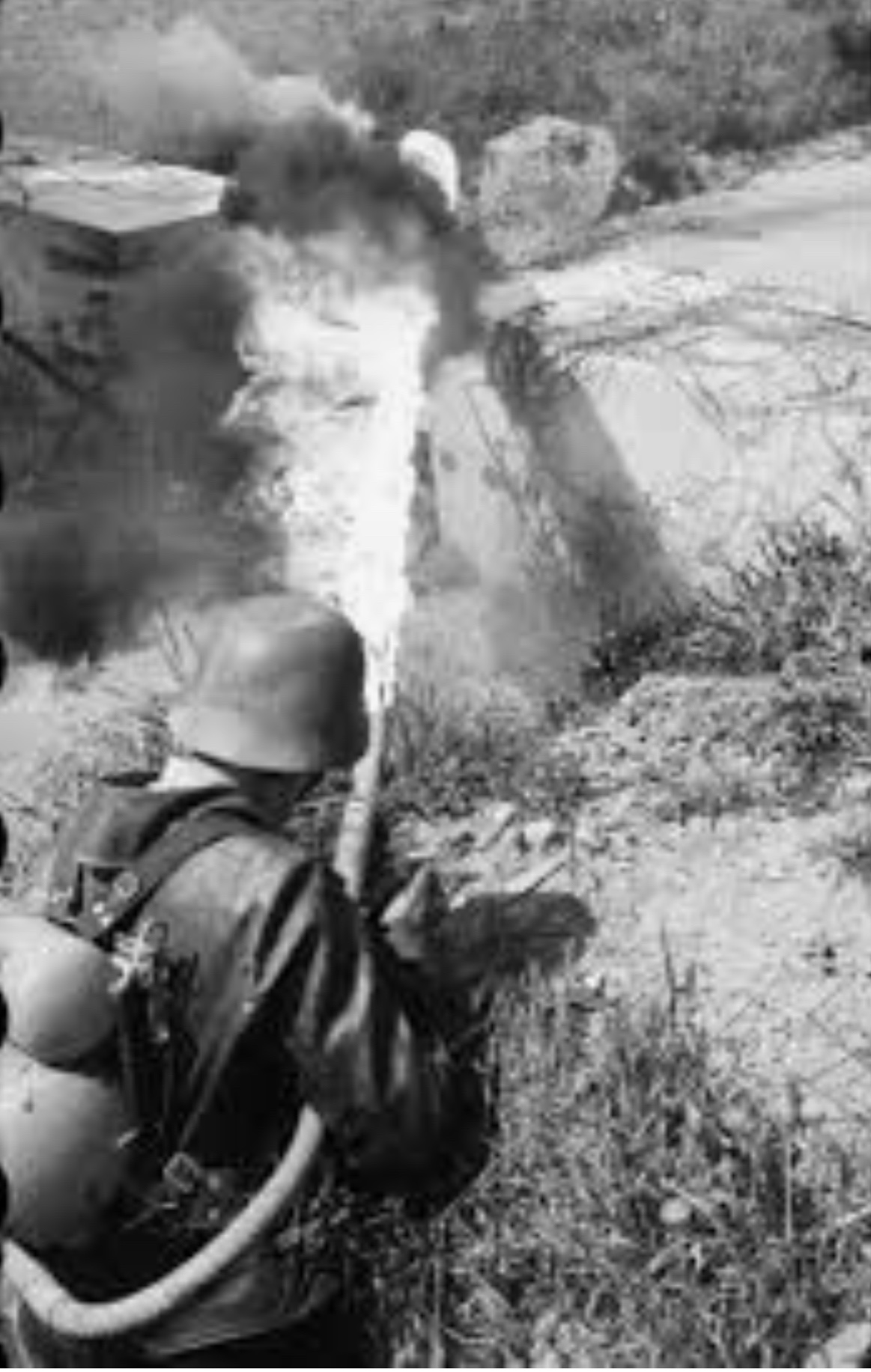
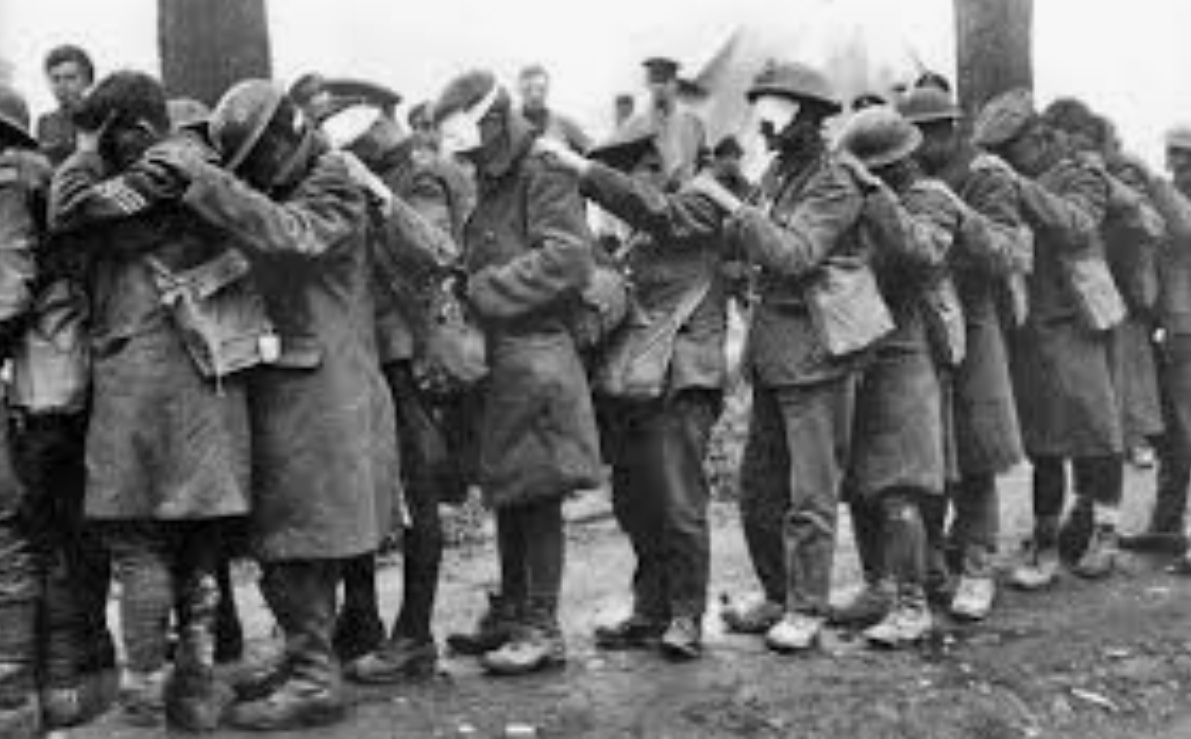
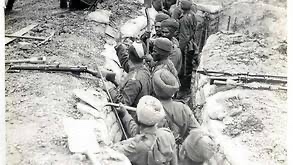
Part of Indian Expeditionary Force (34th Sikh Pioneers, Lahore Brigade), saw action very soon after landing in France (October 1914). As a specialized infantry regiment with expertise in engineering and construction in addition to being conventional infantry men, they quickly supported building and fortification of trenches, establishing communication lines and other infrastructure. Eager to fight, this was the first time these men from India were exposed to ‘Trench Warfare’. Needless to say, the conditions were deplorable! The trenches were mostly waterlogged; full of mud and slime that not only jammed their rifles but also caused them to develop ‘trench foot’ (and led to many a foot amputation). Add to that inclement weather for which initially they didn’t have proper protection (and they had to contend with their summer-grade Khaki uniforms, not ideal for European fall/winter weather). In addition, the trenches were filled with rats competing for their meager rations, and the soldiers had to endure instances of body-lice breakouts! There was the ‘Trench deadlock’ and to gain a few yards, each side of the warring factions faced each other across the no man’s land, and 24/7 launched repeated & aggressive trench attacks, saps and raids. This was aided by heavy artillery bombardment, constant bursts of machine guns, grenades and mortars attacks, arial bombardment and tanks ( although in their infancy), and snipers galore. Of the German armament, ‘Minenwerfers’ (mortar bombs) were the most dreaded. They were effectively used to clear obstacles, bunkers, barbed wires, parapets, sentry positions, etc., and once launched it could be heard coming and with it’s sound getting louder and louder as it approached and then exploded with great power creating a crater as big as a room! It’s psychological impact was so huge that ‘Shell-shock’ was officially recognized by the medical and psychiatric communities. As the war progressed there were even more fearsome weapons such as the ‘Flammenwerfer’ (Flamethrower) that threw/hurtled sheets of flame and smoke towards the trench soldiers and in essence burning them alive! Also, for the first time chemical warfare in the form of large-scale use of lethal poison gas where liquid chlorine was used (second battle of Ypres, 1915) followed shortly afterwards with mustard gas. Needless to say that despite such destruction and horrific conditions, neither side made any meaningful gain! Instead, both sides amassed massive and crippling casualties! Shrapnels, fragments, bullets, bodies and injured everywhere!

Having said that, the ‘Battle of Festubert’ (on November 23-24, 1914), was very pivotal for my ancestor and his regiment. According to Iain Smith (Sikh Pioneers and Sikh Light Infantry Association UK), it was the worst day for the regiment on the Western Front. They were told to take over the German trench at all cost! In the thinly manned Allied Line, the German attack decimated the 34th! 9 out of 12 British Officers were killed, wounded or went missing. Same happened to the men. Only the very experienced soldiers survived and they were instrumental in keeping the morale high and normal functioning of the regiment. One of those Indian officers was Indar Singh, and the regimental records show that he got promoted from Jemadar to Subedar on November 24th, 1914. Also the regimental effort and sacrifice was honored by the King and ‘Royal’ was added and thus the regiment was called the ‘34th Royal Sikh Regiment’. Very few regiments have been honored in this way. Also, at some point, he also received the Russian imperial order of St. Stanislaus (which was reciprocal award amongst the Allies). Plus, there has been a family story that has passed down thru the generations, that he carried his injured commanding officer (CO) 5 miles to safety. In my research, it so turned out that the men did indeed carry their CO Col. GHF Kelly 5 miles to be buried in the cemetery at Beuvry Cemetery, I am assuming my ancestor was one of those men!

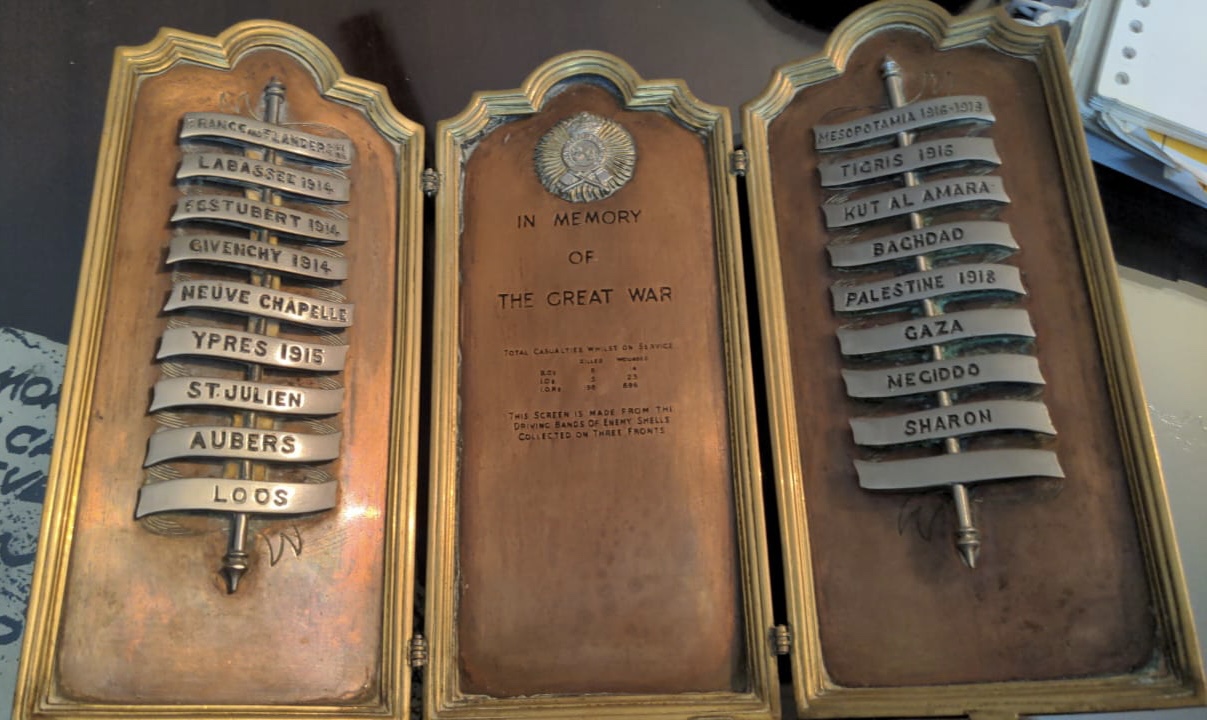
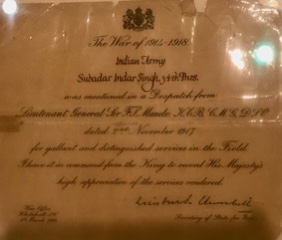
In 1917, the regiment was sent to Basra/ Mesopotamia to take part in the Ottaman empire offensive. During the ‘Battle of Daur’, General Maude mentioned him Despatch (November 2, 1917). In Kut Al Amara, he eventually got wounded with a bullet lodged in his spine. He was sent home as a war-wounded and soon afterwards, he succumbed from his war injuries during the second wave of the Spanish Flu (Oct-Nov, 1918)
Continue reading “An Overdue Honoring on Remembrance Day…”

COVID & The Spanish Flu, An Interesting Parallel…

There is no doubt that the current global COVID-19 health crisis is fluid, perplexing, dramatic, unsettling, paralyzing, and all-consuming; with countless images and data of people hooked up to ventilators or in body bags, healthcare workers & first responders in full PPE, (exhausted in some cases), deserted and empty streets, masked and gloved people and officials, rumors of shortages, etc., are omnipresent 24/7, in all news outlets, social media, concerned welfare calls, expert opinions and analysis, governmental or public health briefings, in unemployment numbers, in obstructed routines, etc.  Although some details are useful and informational, inspiring and even funny, but mostly forbidding, confusing, and conflicting! What’s confounding is the level of disruption, uncertainty, unpredictability and paranoia that prevails.  I wonder why our emotions are so heightened this time around?  Doesn’t the seasonal Flu kill more people annually?  What about more deadlier outbreaks like Swine Flu, SARs, MERs and Ebola, haven’t they become somewhat unmemorable & an illness of the past? It’s odd how we are indifferent and unconcerned to some maladies, yet so irrational and fearful of others?  Is it because its novel (no pun intended) & unfamiliar, and we haven’t developed any coping mechanism for? Or is it more innate and is triggering our reptilian brain and our instinctive survival mechanism?  Could it be even more primordial, perhaps it lays bare the cosmic truth about death, that we ultimately are not in control of how and when we die?

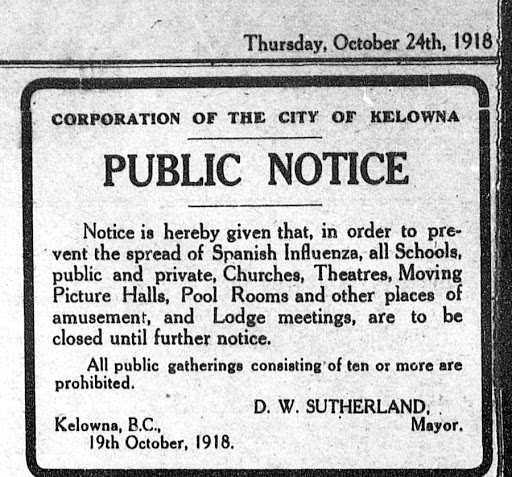
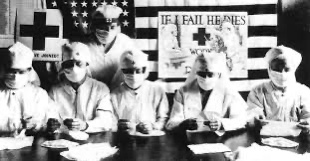
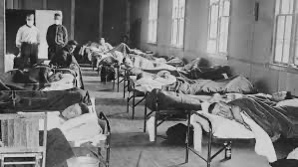
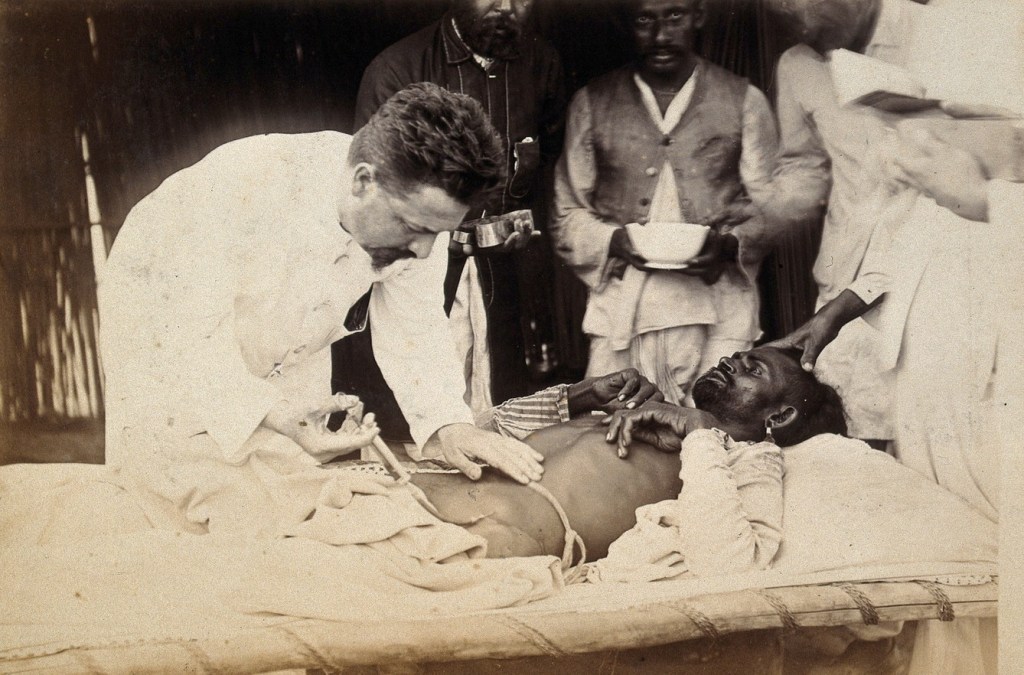
Also, what’s uncanny is the similarity that exists between ‘COVID-19’ crisis and the ‘Spanish Flu’ Influenza’ outbreak from only a 100 years back!  Both respiratory diseases (one coronavirus and the other H1N1) are so analogous that barring the period attire, one can easily swap pictures, posters and advice, and in my opinion one wouldn’t even know the difference!  Also, now overhearing my father, recount over the phone for his friends, the suffering from fall/autumn of 1918-19, as shared by Manji (his beloved grandmother who also lost her husband to this affliction within a short span of returning home to recuperate from the injuries to his spine that he sustained fighting in WW1), I hear him say, “Manji said there were so many deaths, when you returned from one funeral, the next funeral would be ready for cremation”.  I was stunned by this revelation and the poignant, sobering and soul-stirring picture these works painted, that are also so reflective of what we are seeing with the disturbing COVID-19 scenario!  Unfortunately that was the reality of the times and a common suffering, misfortune and depravity that many people and families share globally. I also noted that he called the infirmity ‘Katak di Bimari’ or ‘Illness of Katak’ (Katak, in Punjabi is the eighth month of the Desi calendar, 30 days long, with the first day falling on October 15th and the last day on November 13th), which my father later clarified that because there was absence of formal education and even lack of English language knowledge in the masses, perhaps Manji (and the locals) described this pestilence in Punjabi dialect which they were familiar & comfortable with, and one which made sense to them.  

As I further my research into the perils of ‘Spanish Flu’ in India, I am finding that although it is very well pictorialized in the West, photos from Indian subcontinent was hugely lacking. This felt odd given that Indian deaths accounted for 1/5th of the 50 million deaths worldwide!  Also, India had a large contingent of soldiers in WW1 and in the epicenter France where this disease broke out, what was I missing?  I know experts called it the ‘forgotten pandemic’ and it certainly seemed true from the Indian experience. Also now that are read these two write-ups – 1) Arnold David’s paper titled ‘Death and the Modern Empire: The 1918-19 Influenza Epidemic in India’,  where he states that “the impact of the disease was overshadowed by the prior encounter with bubonic plague, by military recruitment and the war, and by food shortages and price rises that pushed India to the brink of famine”, and 2) Angana Chakrabarti’s article “102 yrs before COVID-19, India braved The Bombay Fever pandemic that killed over 10 mn’,  she calls ‘Spanish Flu’ ‘Bombay Fever’ or ‘Bombay Influenza’!  I wonder if the depravations that existed in colonial India were so grave that people didn’t see ‘Spanish Flu’ as a distinctive disease and also the various colloquial names used to describe the disease takes away from knowing the true human tragedy in India?  While we ponder on this, there is no doubt that Spanish Flu came to India in three waves (like the rest of the world), mainly – 

  1. The first wave manifested in May/June 1918 in the dock workers at the Bombay port.  It lasted about 4 weeks and devastated Bombay (or Mumbai) and which the local British health officer, J.A. Turner, professed at the time “it came to Bombay like a thief in the night” (Chakrabarti, 2020).  Symptoms reported were fever, bone pain, bronchial inflation, congestion, eye pains and a general feeling of malaise.
  2. The second wave, the most lethal & fatal, targeted young men between ages of 20 to 40 years old (of which my aforementioned great-grandfather was one of its fatalities), came to India and Punjab in September 1918 and lasted till December 1918.  
  3. The third and final wave came in 1919.

In closing, although it’s unknown with COVID-19, what the next few days, weeks or months are going to look like, or how it may show up in history’s storyline & timeline, I am confident in the human spirit and its resilience.  Also, history is witness that mankind has overcome many endemics, epidemics and pandemics, so certainly we will prevail over this too.  For now, please head the warnings of the experts, wash your hands, and stay safe.  

References –

Mystery Of The Medal Solved…

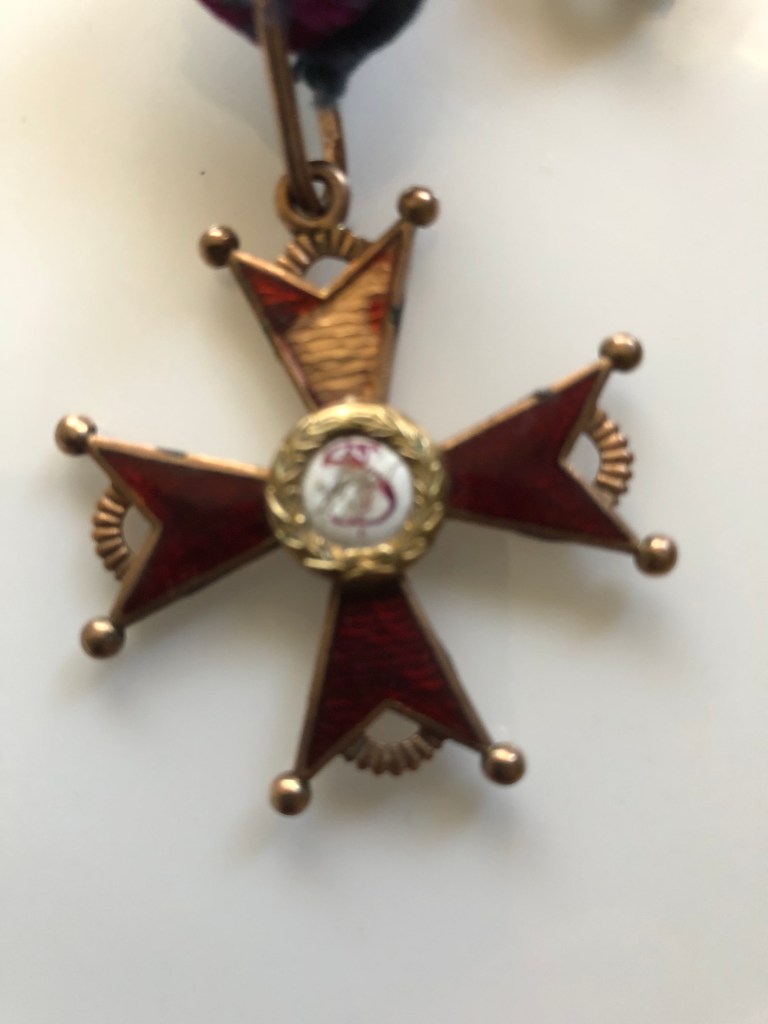
I had a conundrum with one of my ancestors’ medal.  At first glance it is an inconsequential, flimsy medal; a red enameled cross with a ceramic white center with the letters SS surrounded by a gold wreath of sorts.  It doesn’t resemble any known British campaign medal of the time.  Plus, I hypothesized, given its lackluster and diaphanous quality, it to be an insignificant regimental honor given for a sporting competition or some leisure activity.  So you can imagine my astonishment and disbelief when my friend Tejpal shared it to be the Russian Imperial medal ‘The Order of St. Stanislas’ (Orden sv. Stanislava, Орденъ Св. Станислава).  A medal of great historical significance and quite a collector’s item!  

Wait.  What? A dynastic Russian award from the times of the Tsar/Czar!  What? How did my ancestor, an Indian soldier of the British-Indian army, ever get such a decoration?  In what way would he have had contact with any Russian?  As the name of the ancestor is not inscribed on the medal, could it be from Babaji Sawan Singh’s 2nd Afghan war times which was fought to drive Russians out of Afghanistan?  Or was it from Babaji Indar Singh’s generation when Russian empire was part of the ‘triple alliance’ on the Western Front?  It so turns out that during the First World War about 350 ‘Orders of St Stanislas’ were awarded to British and Indian troops!  Iain Smith, my connection from the UK based ‘Sikh Pioneers and Sikh Light Infantry Association’, stated that “at the end of the war, the Allied states made a point of making reciprocal awards of medals to their fellow Allies. You often find lists of medal awards in the London Gazette with British and Indian soldiers receiving French, Belgian, Serbian, Romanian or Russian medals. You are very lucky still to have the medal”.

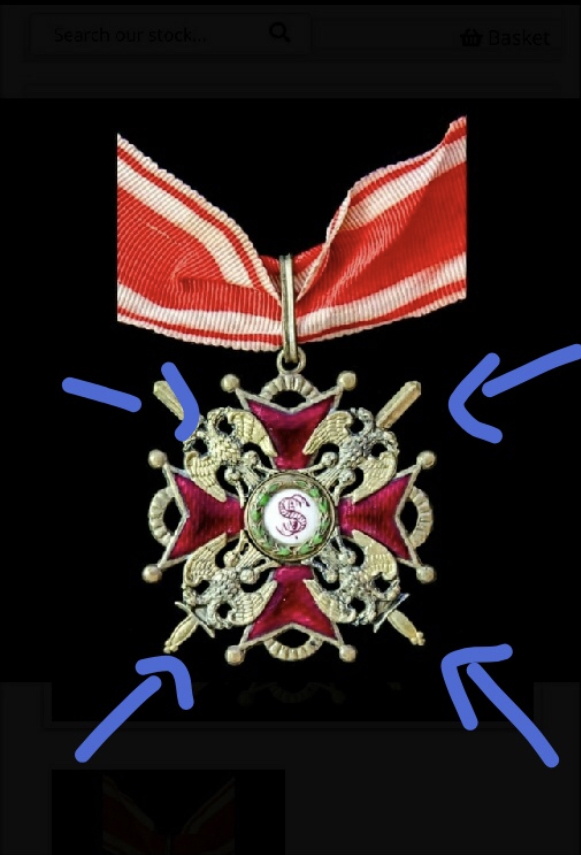
Hold on.  When was the Russian Revolution?  Wasn’t the Russian imperial family deposed in 1917 (while the Great war ended in 1918)?  So, was this awarded under Czar Nicholas II’s reign or by the Russian provincial government that took over when the Czar abdicated?  Although, getting my head around Tsar Nicholas II, ’House of Romanov’ or ‘Lenin’s Bolshevik Revolution’ was overwhelming but it really brought history to life!  Now those boring and monotonous classes of world history (and historical events) had context and connection. Wow!  By now you must be wondering.  What is this award?  From my research it appears that this royal decoration has origins in Poland where it was awarded for ‘chivalry and exemplifying christian virtues’. Then sometime in 1831, it entered the Russian honor system and was given out to both military personnel and civilians for their distinguished service.  In 1844, after undergoing a few revisions and redesigns ( including splitting it into 3 classes), it started to be given out to non-christians as well.  It remained in place in Russia for some time in 1917, when the ‘Provincial Government of Russia’ came into power after the abdication of the Czar.  However, once the ‘Bolsheviks’ took control, all imperial and dynastic award were suspended and discontinued.  The original medal as it would have been awarded to my great grandfather would have been a ‘Bath’ cross with four double-headed eagles (representing the Russian empire) with swords at each angle (all made of gold), with a circular wreath of green laurel holding the white enameled medallion with red SS in the middle.  Plus, it would have been finely crafted in the workshops of highly skilled goldsmiths, silversmiths and enamelers!  

In closing, although, ours is a denuded medal that is stripped of its decoration of gold crown, eagles, and swords (perhaps for its extrinsic value), it is a magnificent reminder of my ancestor’s valor, heroism, sacrifice, and for being brethren in arms in the trenches of an awful war.  It tells of a tremendous story of resilience in the battlefield for which he was recognized by a foreign sovereign/government.  What an exquisite and priceless piece of history which I will cherish all my life!

Other Interesting stuff –

  1. Our medal has a mismatched ribbon! For some reason, a family member swapped out the ribbon with the one from 1911 Delhi durbar.  Hopefully, I can correct it in future once I procure the correct ribbon.
  2. Did you know historians did not chronicle WW1 records until 1922 (4 years after the war ended)?  Therefore, they may have failed to properly document the accounts of Indian soldiers especially the ones who perished before the war records were tabulated.  Thus my great grandfather’s story in an incomplete one! (Thank you Tejpal for this information

References – 

http://www.theaerodrome.com/medals/russia/osts.php

http://www.worcestershireregiment.com/wr.php?main=inc/a_foreign_russian

http://nicholsonadvisory.com/imperial-royal-order-of-st-stanislas

In India’s Folk Songs, Echoes Of WW1 (WSJ Article by Karan Deep Singh)

As I am doing research on WW1 and have been able to trace my GGF Subedar Indar Singh to the western front at Festubert and Neuve Chapelle,  I came across this fascinating article Karan Deep Singh that I would like to share with you.  To access the original posting, please the click this link –  (Original articleWSJ)


In India’s Folk Songs, Echoes Of WWI

                                   — Karan Deep Singh 

A century after World War I — a conflict in which some 1.3 million Indian soldiers fought — echoes of the Great War can still be found in fading folk songs and poetry once popular in corners of rural India.

Academics have long been intrigued by the expressions of love, separation and death imbedded in Indian folklore from the time, particularly in Punjab, an area that contributed nearly half of the Indian army’s volunteer soldiers then. The songs and poems were typically sung by women.

Recently, a London-based poet Amarjit Chandan has been translating some of the works and reciting them in public addresses and performances. “Nobody ever talks about them, not to speak of singing them,” he says. He attributes that partly to a sense of shame over the fact that the soldiers had fought for the British Empire, a colonial oppressor.

Many of the songs are heart-wrenching accounts of women left behind, longing for their husbands, brothers and sons to return from “l’arme,” or  “war” in Punjabi — a word, interestingly, that was adopted widely into the Punjabi language around the time of World War I and is based on the French word for “weapon.”

Here is an excerpt from one song as translated by Mr. Chandan. The word challa would be translated as “my darling”:

Challa here comes the lorry

I carry a heavy basket on my head

I stand and wait for him on the road

With tears in my eyes

Some songs display fears among women that the British were losing the war to Germany. Rawail Singh, a professor in the Punjabi Department at Delhi University, says anti-German sentiment expressed in folk wisdom from the time likely reflects the view of Germany as evil for starting the war.

An excerpt from one such piece:

May you be defeated, O Germany

You have taken my man as a prisoner

May you be wiped out, O Germany

Who has torn the sisters apart from their brothers

The power of folk music wasn’t lost on the military. A popular song of the time, performed and recorded by Bhai Chhaila Patialewala, a famous singer then, was used in effect as an Army propaganda piece, according to Mr. Chandan. “It would have been played in village fairs and recruitment gatherings,” he says, urging the Punjabi men to join the war effort in return for benefits such as tastier food and better clothing.

Here is an excerpt as translated by Mr. Chandan. Roti refers, of course, to the flatbread:

The recruits are at your door step

Here you eat dried roti

There you’ll eat fruit

Here you are in tatters

There you’ll wear a suit

Here you wear worn out shoes

There you’ll wear boot[s]

“This song must be seen in the context of Punjab’s socioeconomic conditions at that time,” says Mr. Singh, the professor. People were poor, and the British offer of 11 rupees a month (just pennies today, but a more sizeable amount at the time) was tempting for would-be soldiers.

The Punjabi role in World War I is starting to draw wider attention today, a century after the conflict. Recently the singer Daler Kaur covered one such song, “Ve mur aa lama ton,” the title of which translates loosely as a woman calling on a loved one to return from war. It was originally sung by Surinder Kaur and written by Punjabi poet Kartar Singh Blaggan.

And the noted Punjabi playwright Atamjit (who uses one name) says he has begun research for a full-length play based on the war. The main focus, he says, will be on remembering the loss of lives as told through from the Punjabi community. “We owe a responsibility to remember. It is already too late,” he says.

The Raj, Wars and My Paternal Ancestors…


This slideshow requires JavaScript.

Last month was special.  I came across some of my ancestor’s military service documents, commendations, awards/medals, etc., for the empire days (majority of which didn’t survive partition of India and the great migration that ensued in 1947).  I was most excited about two notable documents – First, being a 130 year old enlistment certificate from the reign of Queen Victoria of my great great grandfather Sawan Singh, and second, a WW1 commendation certificate of my great grandfather Indar Singh signed by Sr. Winston Churchill (the then secretary of war). This month we also celebrate the 100th Armistice Day marking the end of World War One.

It reviewing the documents, it appears that on October 5th, 1888, my great- great- grandfather Sawan Singh enlisted in the ‘34th Sikh Pioneers’, an infantry assault regiment of the British-Indian army. I remember Manji (my great grandmother) telling us that Babaji Sawan Singh had a very long and illustrious service, that he was a Subadar-Major (which is the highest rank an Indian could attain in the Imperial armies at that time), and that he was awarded a land grant of 5 Murraba (125 Acres) in the village of ‘GB Chak No. 232’ in Lyallpur district (now in Pakistan).She also talked about all the memorabilia he brought from his various deployments, especially the Chinese storage boxes (Sandooks) and Peking Silk that had to be left behind during the hasty migration of 1947.  My research shows that some of his deployments would have been ‘relief of Chitral’ (1897), ‘Tirah Campaign’ (1897-1898), China ‘relief of Peking and Tientsin’ (1900-1901) following the boxer rebellion, etc.

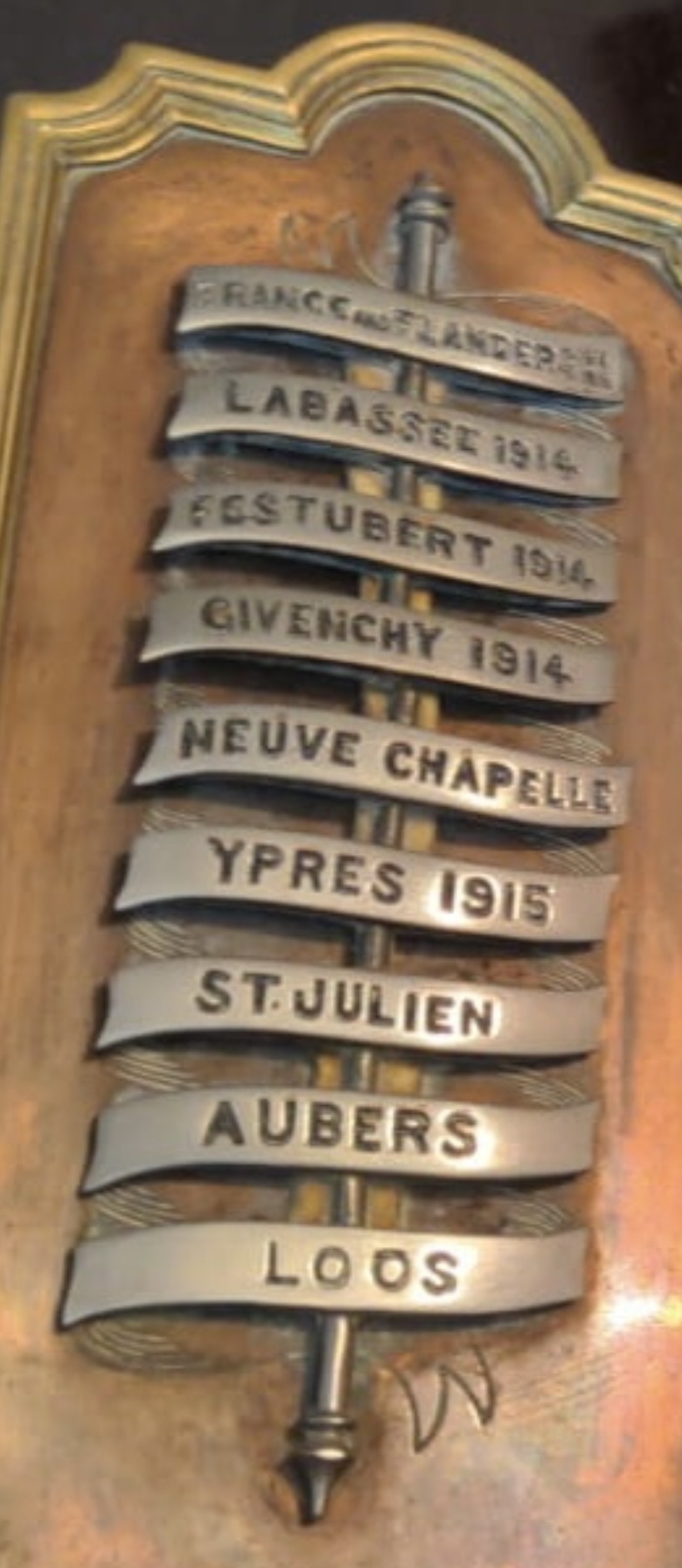
Indar Singh, my great grandfather, also followed in his father’s footsteps and enlisted in the 34th Sikh Pioneers.  During the ‘Great War’ of 1914-18, his regiment (part fo the 3rd Lahore division) was first deployed on the Western Front and winning the battle honors of Festubert, St Julien, La Bassee, Armentieres, Givenchy, Neuve Chapelle, Ypres, France and Flanders, and then moved to the Middle East in the Mesopotamia Campaign where he fought against troops of the Ottoman Empire.  Manji used to mention that he showed great bravery in the battlefield, and despite being wounded himself, carried his commander to safety.  He returned home shortly thereafter as a war-casualty, and later succumbed to his injuries at home, during the month of ‘Kata’ (Punjabi month that straddles October/November), in 1918 during the deadly ‘Spanish Influenza’ outbreak.  Although Manji was pregnant with my grandfather when he passed away (so he never got to see his son).  Manji stated that he was tall (6’ 4” or 6’5″), good looking, and also a Subadar-Major like his father.  She would also talk about her wedding (she being his second wife), going to Ambala Cantt (the base of his regiment) where he was stationed as a Jamadar-Adjutant (which she pronounced Jamadar-Jitten).  She also shared of her good relations with his first wife Rattan Kaur and her stepdaughter Kamal Kaur (my father also remembers Bhauji Kamal Kaur very fondly).

Although these artifacts & stories made me aware of their rich lives and legacies, it also makes me wonder how they would have been in person.  Although history may not give them the proper dues, I for sure have a greater appreciation, respect and awe of their bravery, sacrifices, and courage.  I salute them and honor their DNA that runs thru my veins.