An Overdue Honoring on Remembrance Day…

Babaji Indar Singh

Today, on this Remembrance/Veterans Day, the world celebrates and honors the fallen soldiers of the Great War. It also commemorates the day Armistice was signed that brought World War 1 to its end. In this sea of poppies, which is considered a symbol of sacrifice, I too want to recognize and pay tribute to my ancestor Subedar Indar Singh, who saw the various theatres of war fighting the Germans in Flanders & Western Front and later the Ottoman Empire in Mesopotamia.
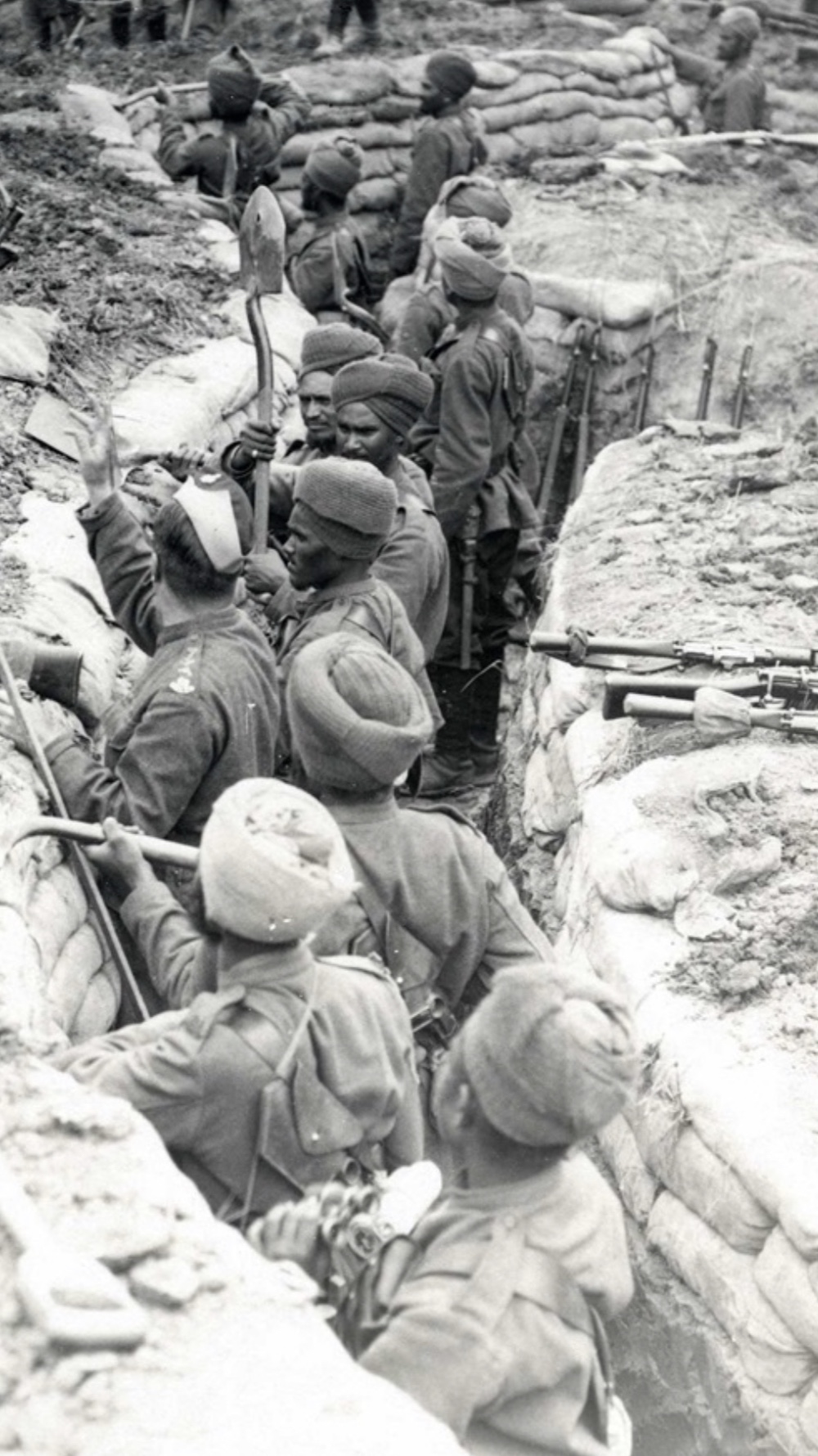


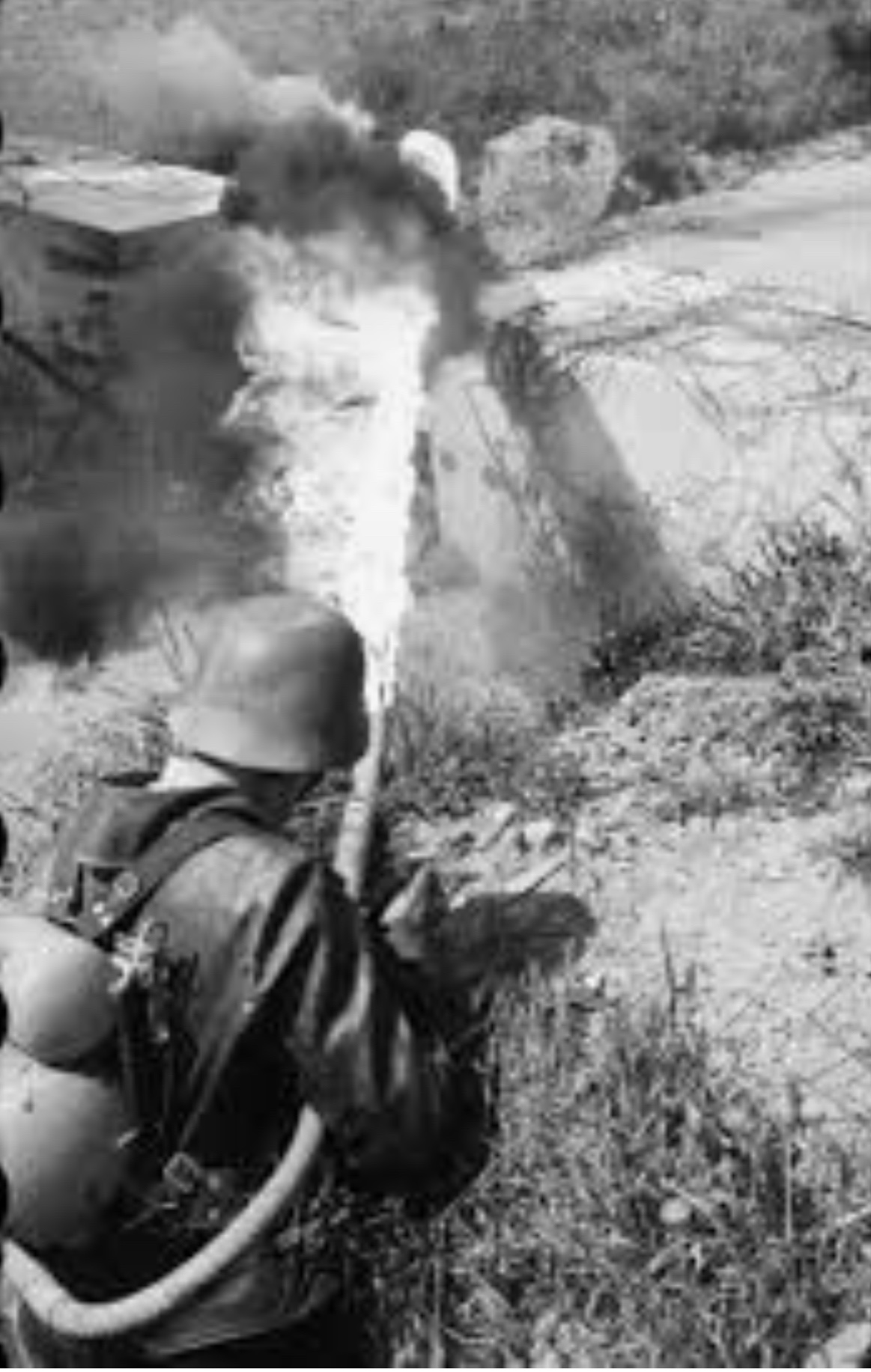
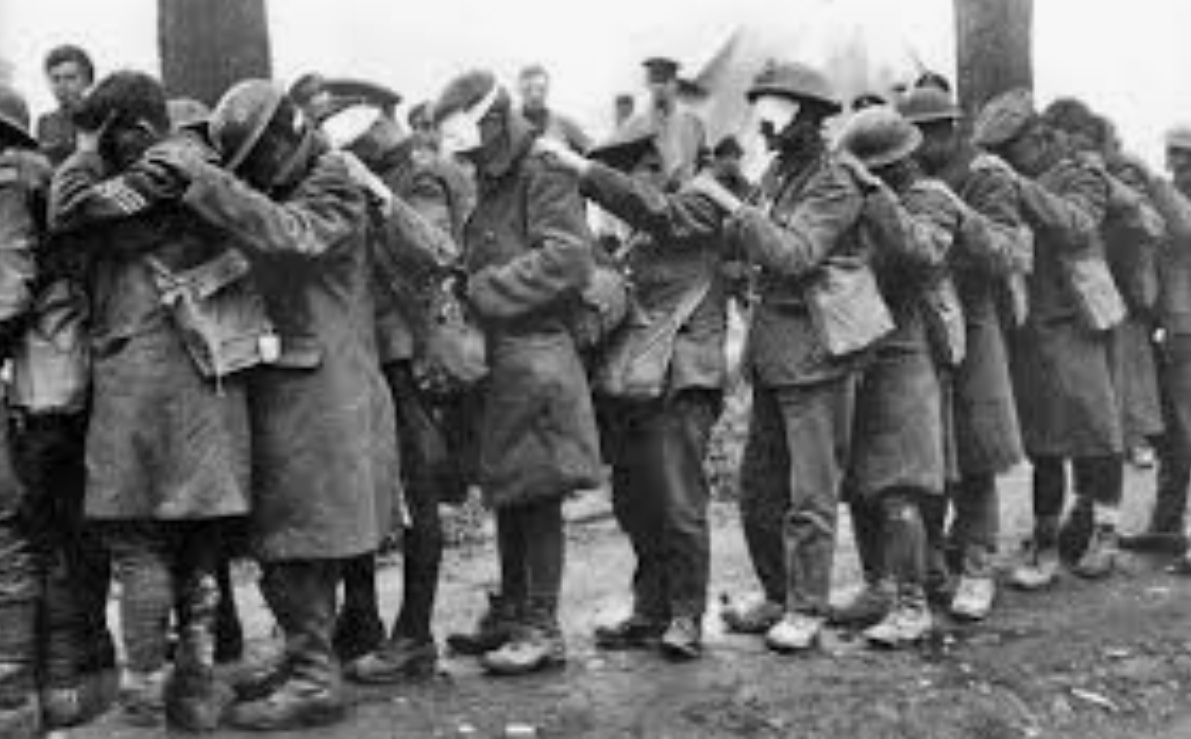
Part of Indian Expeditionary Force (34th Sikh Pioneers, Lahore Brigade), saw action very soon after landing in France (October 1914). As a specialized infantry regiment with expertise in engineering and construction in addition to being conventional infantry men, they quickly supported building and fortification of trenches, establishing communication lines and other infrastructure. Eager to fight, this was the first time these men from India were exposed to ‘Trench Warfare’. Needless to say, the conditions were deplorable! The trenches were mostly waterlogged; full of mud and slime that not only jammed their rifles but also caused them to develop ‘trench foot’ (and led to many a foot amputation). Add to that inclement weather for which initially they didn’t have proper protection (and they had to contend with their summer-grade Khaki uniforms, not ideal for European fall/winter weather). In addition, the trenches were filled with rats competing for their meager rations, and the soldiers had to endure instances of body-lice breakouts! There was the ‘Trench deadlock’ and to gain a few yards, each side of the warring factions faced each other across the no man’s land, and 24/7 launched repeated & aggressive trench attacks, saps and raids. This was aided by heavy artillery bombardment, constant bursts of machine guns, grenades and mortars attacks, arial bombardment and tanks ( although in their infancy), and snipers galore. Of the German armament, ‘Minenwerfers’ (mortar bombs) were the most dreaded. They were effectively used to clear obstacles, bunkers, barbed wires, parapets, sentry positions, etc., and once launched it could be heard coming and with it’s sound getting louder and louder as it approached and then exploded with great power creating a crater as big as a room! It’s psychological impact was so huge that ‘Shell-shock’ was officially recognized by the medical and psychiatric communities. As the war progressed there were even more fearsome weapons such as the ‘Flammenwerfer’ (Flamethrower) that threw/hurtled sheets of flame and smoke towards the trench soldiers and in essence burning them alive! Also, for the first time chemical warfare in the form of large-scale use of lethal poison gas where liquid chlorine was used (second battle of Ypres, 1915) followed shortly afterwards with mustard gas. Needless to say that despite such destruction and horrific conditions, neither side made any meaningful gain! Instead, both sides amassed massive and crippling casualties! Shrapnels, fragments, bullets, bodies and injured everywhere!

Having said that, the ‘Battle of Festubert’ (on November 23-24, 1914), was very pivotal for my ancestor and his regiment. According to Iain Smith (Sikh Pioneers and Sikh Light Infantry Association UK), it was the worst day for the regiment on the Western Front. They were told to take over the German trench at all cost! In the thinly manned Allied Line, the German attack decimated the 34th! 9 out of 12 British Officers were killed, wounded or went missing. Same happened to the men. Only the very experienced soldiers survived and they were instrumental in keeping the morale high and normal functioning of the regiment. One of those Indian officers was Indar Singh, and the regimental records show that he got promoted from Jemadar to Subedar on November 24th, 1914. Also the regimental effort and sacrifice was honored by the King and ‘Royal’ was added and thus the regiment was called the ‘34th Royal Sikh Regiment’. Very few regiments have been honored in this way. Also, at some point, he also received the Russian imperial order of St. Stanislaus (which was reciprocal award amongst the Allies). Plus, there has been a family story that has passed down thru the generations, that he carried his injured commanding officer (CO) 5 miles to safety. In my research, it so turned out that the men did indeed carry their CO Col. GHF Kelly 5 miles to be buried in the cemetery at Beuvry Cemetery, I am assuming my ancestor was one of those men!

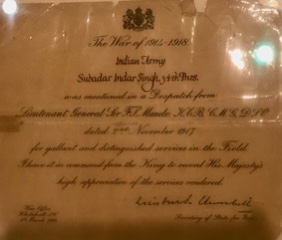
In 1917, the regiment was sent to Basra/ Mesopotamia to take part in the Ottaman empire offensive. During the ‘Battle of Daur’, General Maude mentioned him Despatch (November 2, 1917). In Kut Al Amara, he eventually got wounded with a bullet lodged in his spine. He was sent home as a war-wounded and soon afterwards, he succumbed from his war injuries during the second wave of the Spanish Flu (Oct-Nov, 1918)
Continue reading “An Overdue Honoring on Remembrance Day…”

The Festival of ‘Hola Mohalla’


Each year, I hear about the festival of ‘Hola Mohalla’ from my Chachaji from ‘Pind’ (village).  His fervor and eagerness to go to Anandpur Sahib to partake in the festivities and set up for the ‘Langar Seva’ (selfless service as a free kitchen), plus the photos that I have seen of the jubilation and revelry intrigues me to not only attend it one day, but also is very reminiscent of a bygone era!  It also invokes great reverence for the 10th guru, Guru Gobind Singh, who was getting ordinary Sikhs physically and mentally ready to take on a mighty Mughal Army and challenge its emperor Aurangzeb, who was conducting unimaginable and bloodcurdling autocracies.  The quote of Guru Gobind Singh’s that comes to mind is “chirian te mein baaz ludaun, gidran to mein sher banaun, sawa lakh se ek ladaun, tabe Gobind singh Naam kahaun’ (only shall I be called Gobind Singh, when I train the sparrow to fight the hawk, I turn jackals into lions, and I make one Sikh fight a legion of hundred thousand’).  I feel if I was there I would invoke the spirit and presence of the guru himself!

So what is this festival ‘Hola Mohalla‘?  It is a three-day martial arts festival which is held annually during spring time, in Anandpur Sahib, the day after ‘Holi’ (the festival of colors) is celebrated. So this year Holi falls on March 21st, so Hola Mohalla will be celebrated March 22nd to the 24th! Some say that the word ‘Hola’ is a masculine variant of the word ‘Holi’, but the best explanation I found is by Bhai Kahan Singh, who points that the world ‘Hola’ is derived from the word ‘Halla’ (pronounced Hul-la) which means to attack, to assault or to descend upon, while the term ‘Mohalla (pronounced Ma-halla) stands for an organized parade or procession.  So together, it means the ‘the charge of the cavalry or armies’.  This makes sense given that the Sikhs and Nihangs gather to display their valor and prowess in a militaristic manner, and the festivities include demonstrations of swordsmanship, fancy foot works, ‘Gatka’, horsemanship, tent pegging, bareback horse riding, etc. Also battlefield mastery is demonstrated thru mock battles & combats.  Although all this are from a bygone era, the essence of the festival is ‘bravery’ and a reminder to that Sikhs that they are soldier-saints who have a duty to protect and honor the helpless and downtrodden.  


The Raj, Wars and My Paternal Ancestors…


This slideshow requires JavaScript.

Last month was special.  I came across some of my ancestor’s military service documents, commendations, awards/medals, etc., for the empire days (majority of which didn’t survive partition of India and the great migration that ensued in 1947).  I was most excited about two notable documents – First, being a 130 year old enlistment certificate from the reign of Queen Victoria of my great great grandfather Sawan Singh, and second, a WW1 commendation certificate of my great grandfather Indar Singh signed by Sr. Winston Churchill (the then secretary of war). This month we also celebrate the 100th Armistice Day marking the end of World War One.

It reviewing the documents, it appears that on October 5th, 1888, my great- great- grandfather Sawan Singh enlisted in the ‘34th Sikh Pioneers’, an infantry assault regiment of the British-Indian army. I remember Manji (my great grandmother) telling us that Babaji Sawan Singh had a very long and illustrious service, that he was a Subadar-Major (which is the highest rank an Indian could attain in the Imperial armies at that time), and that he was awarded a land grant of 5 Murraba (125 Acres) in the village of ‘GB Chak No. 232’ in Lyallpur district (now in Pakistan).She also talked about all the memorabilia he brought from his various deployments, especially the Chinese storage boxes (Sandooks) and Peking Silk that had to be left behind during the hasty migration of 1947.  My research shows that some of his deployments would have been ‘relief of Chitral’ (1897), ‘Tirah Campaign’ (1897-1898), China ‘relief of Peking and Tientsin’ (1900-1901) following the boxer rebellion, etc.

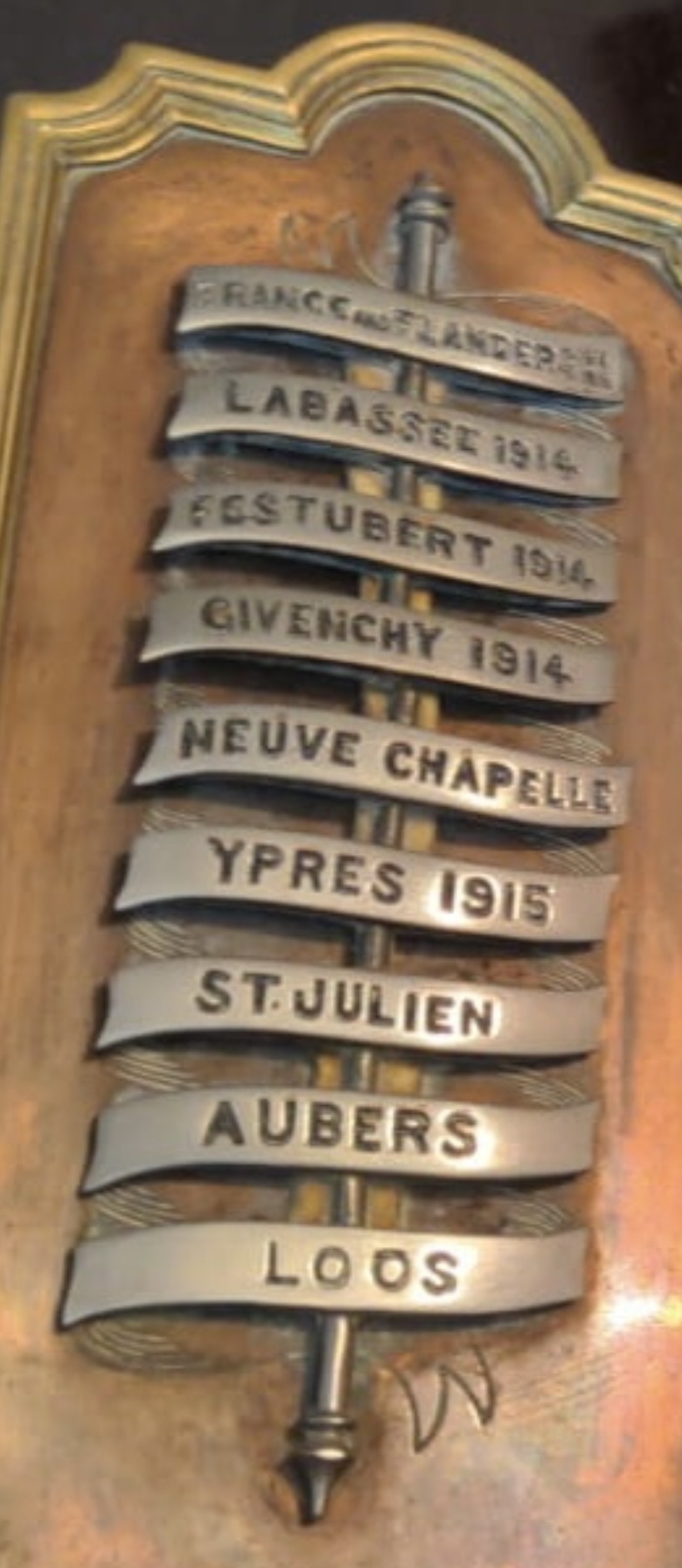
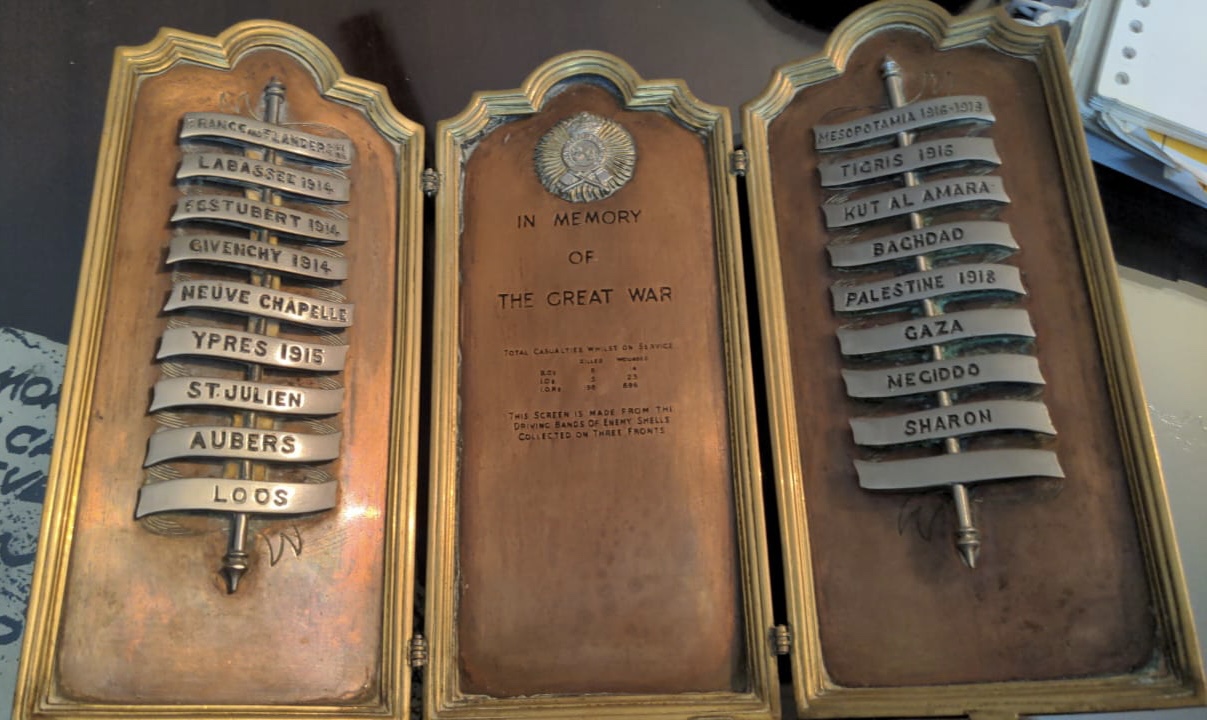
Indar Singh, my great grandfather, also followed in his father’s footsteps and enlisted in the 34th Sikh Pioneers.  During the ‘Great War’ of 1914-18, his regiment (part fo the 3rd Lahore division) was first deployed on the Western Front and winning the battle honors of Festubert, St Julien, La Bassee, Armentieres, Givenchy, Neuve Chapelle, Ypres, France and Flanders, and then moved to the Middle East in the Mesopotamia Campaign where he fought against troops of the Ottoman Empire.  Manji used to mention that he showed great bravery in the battlefield, and despite being wounded himself, carried his commander to safety.  He returned home shortly thereafter as a war-casualty, and later succumbed to his injuries at home, during the month of ‘Kata’ (Punjabi month that straddles October/November), in 1918 during the deadly ‘Spanish Influenza’ outbreak.  Although Manji was pregnant with my grandfather when he passed away (so he never got to see his son).  Manji stated that he was tall (6’ 4” or 6’5″), good looking, and also a Subadar-Major like his father.  She would also talk about her wedding (she being his second wife), going to Ambala Cantt (the base of his regiment) where he was stationed as a Jamadar-Adjutant (which she pronounced Jamadar-Jitten).  She also shared of her good relations with his first wife Rattan Kaur and her stepdaughter Kamal Kaur (my father also remembers Bhauji Kamal Kaur very fondly).

Although these artifacts & stories made me aware of their rich lives and legacies, it also makes me wonder how they would have been in person.  Although history may not give them the proper dues, I for sure have a greater appreciation, respect and awe of their bravery, sacrifices, and courage.  I salute them and honor their DNA that runs thru my veins.