
Growing up I was acutely aware that I belonged to a Sikh family and was different from the population at large. Although there were quite a few Sikhs in the different Air Force stations that my father got posted to, we were still a small number. I remember my father looked different from other fathers because of his turban, my mother was taller than all my friends mothers’ & wore salwar-kameez as opposed to saris, their penchant for speaking Punjabi to each other (and their delight when other folks spoke their mother-tongue) while switching to other dialects in public. Plus, the unfettered liberty my classmates/friends took in cracking Sikh jokes also added to one feeling distinctive.
Having said that what I was not much cognizant of the clan/caste differentiation that is so deeply rooted & entrenched in the psyche, traditions, beliefs and sentiments of the society and people of the subcontinent. I think my first recollection of this stratification was thru my school curriculum where the ‘Laws of Manu’ was taught in history and sociology classes. Although, as a minor, I didn’t see much evidence and any questions I had regarding caste/clan was countered with a very healthy discourse that the Sikh Gurus departed from such practice(s), and in the formation of the ‘Khalsa Panth’ (Sikh religion) the last Guru homogenized the religion by abolishing the clan/caste delineation by instituting that all men were to be called ‘Singh’(Lion) and women as ‘Kaur’ (Princess) as their last name. Regardless, awareness of caste/clan social order crept in subtly and perhaps thru socialization! For instance, during our annual vacation trip to Punjab, it was customary for my grandparents to take us to our ‘Pind’ (village), not only to mingle with our rural cousins, expose us to our ‘Jat’ roots, visit our farms, but also to socialize us to the ways of the ‘Jats’! It was expected that as children of prominent ‘Jat Sikh’ family of our village, we not only needed to be familiar of our rural land holdings, what the land grew, when was the harvest season, etc. Any talks of selling these lands were quickly hushed and made known that there is no Jat without land (farms that is). For me the unspoken bias regarding inter-clan/caste dynamics came into prominence during my sister’s wedding. My sister was marrying a ‘Khatri’ Sikh, and the idea that my parents even sanctioned it to take place was very unpalatable for many of our relatives. They made their opposition & disapproval to this union known, with some being very vocal whilst others grumbling behind closed doors. This was a bit of surprise to me given she was marrying a Sikh guy (and the only other example I know of a marriage that was opposed was that of my cousin who married a ‘Gupta’ but I thought that antipathy was because she married outside the religion!). Now that after two decades of marriage my sister and her husband are divorcing, the same polarity & dogmatism is surfacing with our relatives surfacing their original opposition to this marriage. I realized that the clan/caste lines in India is very dominant and it transcends religion and time. Powerful stuff!
Having knowledge of this bias, I was very surprised during my research into my paternal ancestor’s military service in the British-Indian Army that their regiments (23rd and the 34th Sikh Pioneers) were predominantly compromised of Sikhs from the ‘Mazbi’ clan. The more I researched the more it got confusing with most literature calling all members of the regiments as ‘Mazbis’ as well as modern day experts congratulating me for the bravery of my ‘Mazbi’ ancestors. Initially all this amusing given my introductory remarks but it became very apparent to me of the disservice this is creating toward the contributions of others that were also part of the regiment, and their participation was going unrecognized! Although I have lots of questions, mainly around how come my paternal ancestors who were ‘Jat Sikhs’ end up in a regiment of ‘Mazbi Sikhs? Were they progressive and aspired to the teachings of the Sikh Gurus who attempted to erode these class/caste/clan structures? or were they ambitious and saw an opening for faster promotion in a regiment of a different clan? I guess the answer I will never know but I do know that they were brave men and their contribution is immense which I will make entries in future blogposts.


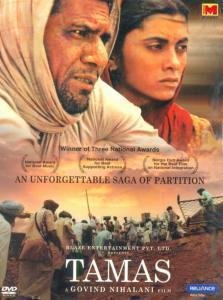 Then in 1988, came this 10-part miniseries called ‘Tamas’, directed by Govind Nihalani (based on a 1974 novel of Bhisham Sahni of the same name). This TV film depicted the 1947 partition of Punjab that resulted in Sikh-Muslim-Hindu genocide (part of India’s independence from Great Britain that saw the creation of Pakistan). This series had a profound and deeply transformational effect on me. Not only was I exposed to certain truths and circumstances, I realized that what I thought to be my grandparent’s folktales was in fact my family’s story and reality (how they had to leave all their possession in a haste and start a new life in India-Punjab with not much to their name). I understood the family’s (and punjabi people’s) deep loss, suffering and true grit that got them thru this ordeal and transformed them as people, culture and clan, and grasped how I was part of that fabric and needed to honor their bravery and sacrifices.
 Erudite Kahani