
I wasn’t raised in Punjab where a lot of familial, societal and environmental exposures & influences would have shaped my upbringing. Instead, my father’s Indian Air Force (IAF) career, made for a rich but unconventional childhood. Due to his postings, we generally moved every two years to live in a different part of India and got to experience a brand new culture. For instance, we could go from an urban city like ‘New Delhi’ to rural/remote ‘Chabua’ in upper Assam surrounded by tea gardens and jungles. These Air Force stations were truly a melting pot of various cultures of India. Although, Sikhs and Punjabis had a robust representation in the Indian Military, my exposure to Punjab’s language, food, culture, religions, people, etc., took place mainly during summer vacations spent in Punjab with my grandparents and other relatives (where we would hear about our family roots in west-Punjab, now in Pakistan), listening to my parents and their friends conversing in Punjabi, and going to the Gurudwara for the ubiquitous holidays or during the weekends.
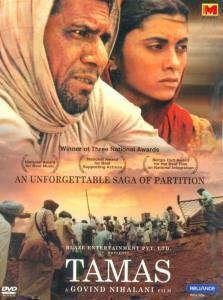 Then in 1988, came this 10-part miniseries called ‘Tamas’, directed by Govind Nihalani (based on a 1974 novel of Bhisham Sahni of the same name). This TV film depicted the 1947 partition of Punjab that resulted in Sikh-Muslim-Hindu genocide (part of India’s independence from Great Britain that saw the creation of Pakistan). This series had a profound and deeply transformational effect on me. Not only was I exposed to certain truths and circumstances, I realized that what I thought to be my grandparent’s folktales was in fact my family’s story and reality (how they had to leave all their possession in a haste and start a new life in India-Punjab with not much to their name). I understood the family’s (and punjabi people’s) deep loss, suffering and true grit that got them thru this ordeal and transformed them as people, culture and clan, and grasped how I was part of that fabric and needed to honor their bravery and sacrifices.
In addition, the series had a very powerful ‘Shabad‘ (hymn) ‘Deh Shiva Bar Mohe Hai‘ sung exceptionally by ‘Singh Bandhus’ (Mr. Tejpal Singh and Surinder Singh), which not only evoked in me a lifetime love for hindustani classical music but this awe-inspiring shabad and its stalwart wordings transmogrified me forever. This is a prayer that asks the Almighty to give the follower a life of courage and bravery of the highest levels of righteousness, and never fearing, hesitating, shying or shirking from undertaking virtuous acts that defend human rights including protecting poor, weak and/or needy.


 Erudite Kahani