


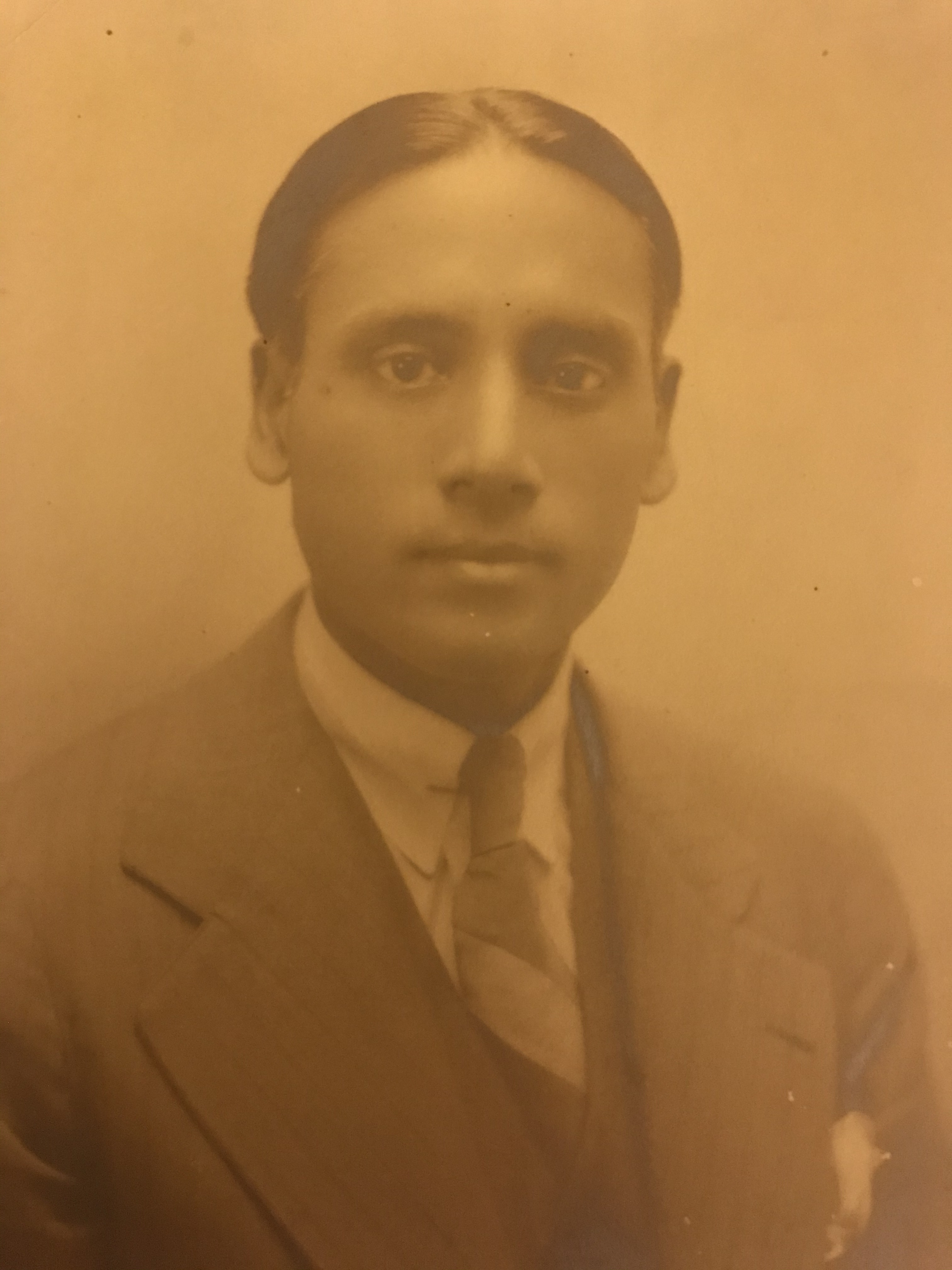
Capt. Bhagwant Singh Grewal
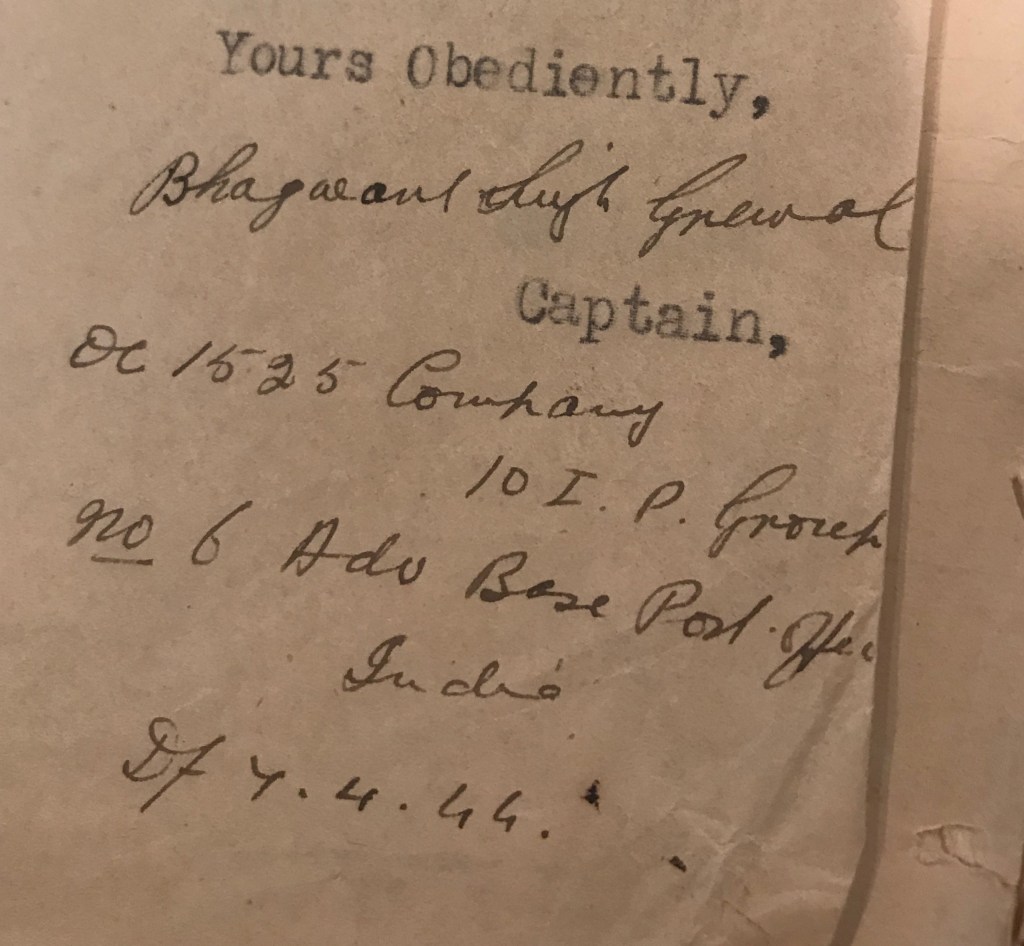
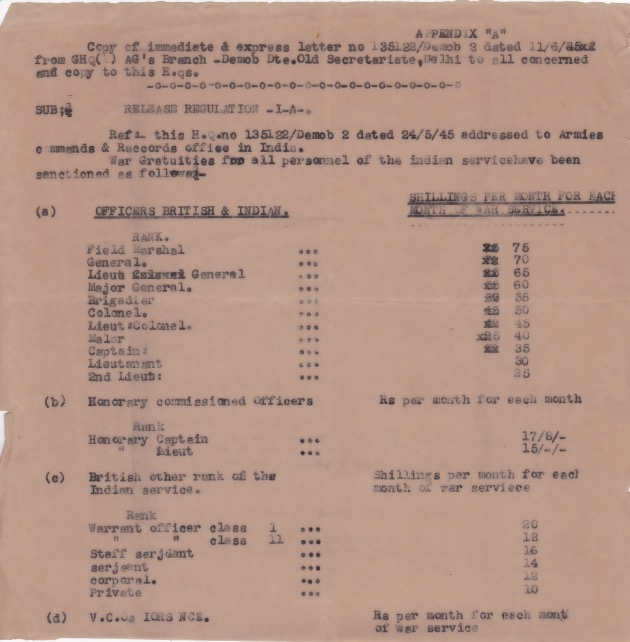
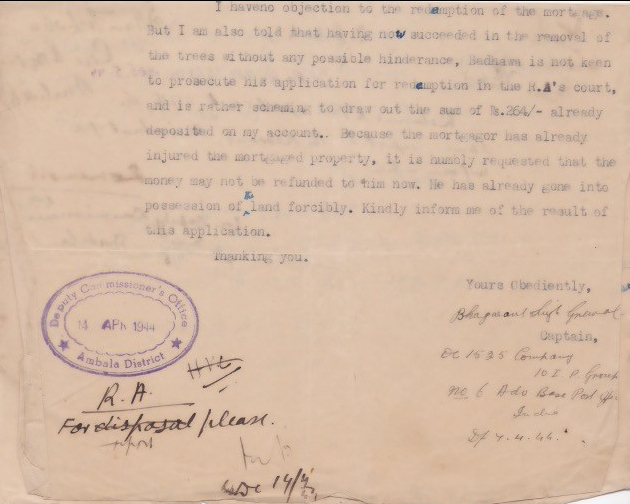
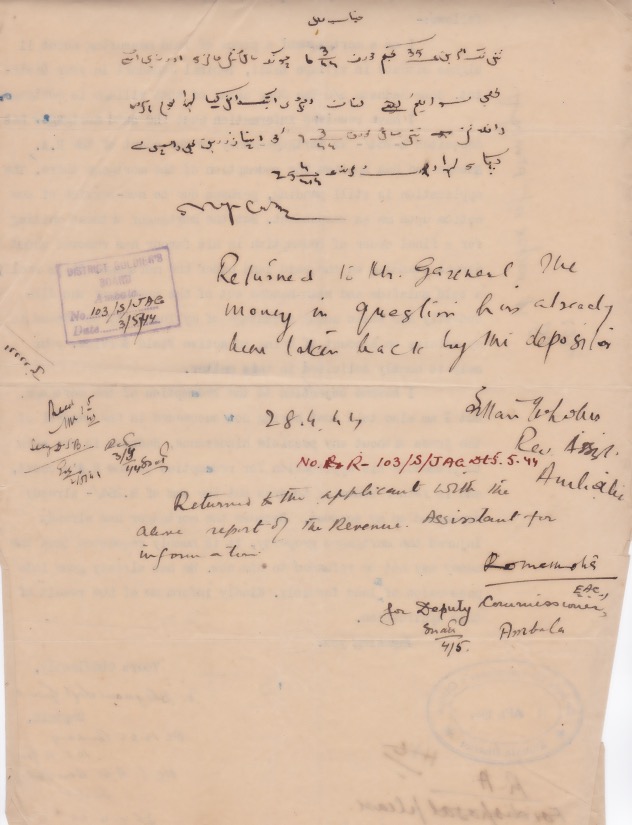
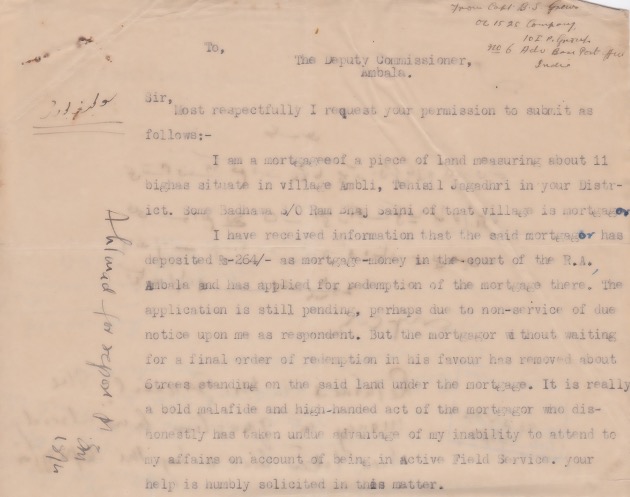
As the world celebrates the 75th Anniversary of the VE Day marking the end of WW2, I want to pay homage to my ancestor, Captain Bhagwant Singh Grewal. As an officer in the Indian Pioneer Corps, he is credited for constructing the emergency airport at Imphal, and shortly thereafter, he came under heavy bombardment of the retreating Japanese on the Burma front. At first, he was presumed dead (and the family informed of his missing-in-action status), he was eventually located at the Military Hospital in Jalna (near Pune/Poona) with severe head injuries. During surgery, parts of his ruptured cranium was removed and replaced with a platinum plate. Once he recovered, his medical category was permanently downgraded and sent home for his disability (war-wounded). Although all his life he had to deal with episodes of disabling seizures and headaches (for which my mother recalls, he had to be given sulphur pills and never left alone), he actually lived a full and long life. On February 5th, 1973, he passed away at the ripe age of 75 years.


Right: Narain Kaur, Mother of Bhagwant Singh, Only Sister of Seven Mansa Sardars
His life story is very engrossing and captivating. An only child, he was born on 18th August 1898, to Bhagwan Singh (Nazim of Nabha State) and his wife Narain Kaur (of Mansa Sardars). Although my mother doesn’t remember much about his childhood or where he did his basic education, she does have knowledge that he attended Khalsa College Amritsar. While studying there, he also persisted thru the Jallianwala Bagh massacre (which he and his fellow students survived only by laying flat, staying still, and then eventually scaling the walls in the wee hours of the night). Thereafter, on 5th December 1919, he got married to Chitwant Kaur (nee Sangha), daughter of the Nazim of Patiala state. The story behind their betrothal is also fascinating! It turns out that there was a judgment handed out by the Nazim of Patiala State that was delivered to the Nazim of Nabha state, and at first the penmanship of the Patiala Nabha impressed the Nabha Nazim, but when the latter found out that the beautiful handwriting was that of his daughter, my ancestor promptly sent a proposal so that both their children could be married. My mother states that her grandfather used to say that a refined and educated mother will ensure that future generations value education and learning. However, this was not an easy feat, firstly because of the inter-royal rivalries between these two Phulkian states, and second, because the Regent of Patiala was a known philanderer, so getting permission to allow for this inter-state marriage was impossible. This was achieved by the wedding ceremonies conducted in Ludhiana (Bhadaur House) and away from the politics of both royal states.
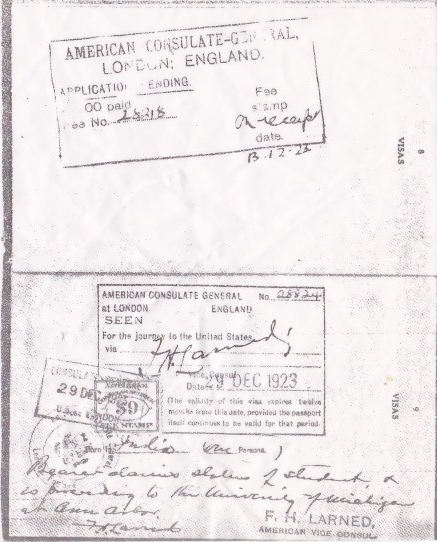
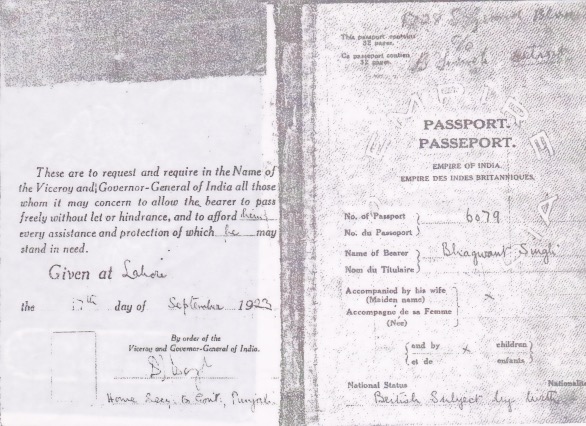
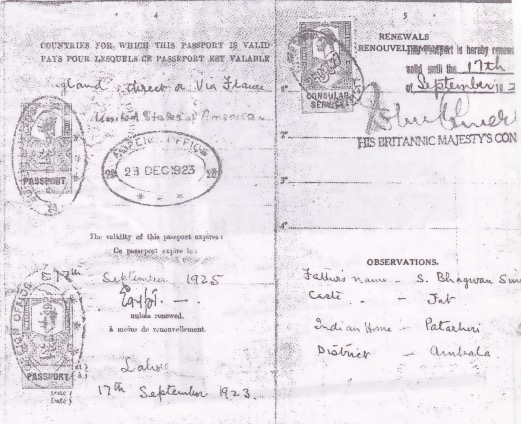
Then in 1923, after the birth of my aunt, my grandfather went to Ann Arbor Michigan, to study mechanical engineering. While at there, he actually meets Henry Ford in a ball! Mr Ford very impressed and intrigued by his turban, stuck a conversation, and asked my grandfather to look him up when he finished his education. The family narrative is that he worked with Henry Ford for a short period, who then offered him the position to be the General Manager for Ford Motors for Southeast Asia (based out of Bombay). Although he agreed, the family was not very happy about it because the general attitude of Indian society those days was that with independence came bad habits (due to lack of family’s checks and balances). So they had another plan waiting for him! His father had contacted the Viceroy of India and a military career awaited him! He enlisted in the British Indian Army as a permanent commissioned officer, and joined the Madras Sappers and Miners regiment. It was tantalizing to learn from my Uncle that he was also trained to be a cipher and the only India as a core member of thee war operation office in India. However, when there was a troop movement leak, the suspicion fell on him as being the lone Indian with high security access to secret operations and classified information. Needless to say, he was suspended till all investigations into the matter were concluded. In due course, it was discovered that one of the British secretary, excited that her boyfriend was on one of these deployed ships, inadvertently disclosed this information while inebriated in the bar. My grandfather was reinstated, but these events were distressing to him so he asked for a change of branch. Being an engineer, he then joined the ‘Indian Pioneer Corps’ (as a commanding officer) and that’s how he ended up on the eastern border and in Burma.

From Left: Beant, Kuldip, Swaroop, Gursharan, Bharpoor, Birinder and Satwant (my mother, on the lap)
All together, he had quite a life! Only regret I have (and its a selfish desire) that I wish my mother was not the youngest child and I could have really known him. Nonetheless, I am very glad that my mother is quite an historian & record-keeper, and she (over the years) has shared so many cherished stories and anecdotes that I feel that I really do know him – his likes/dislikes, his character traits, and the kind of person he truly was. For that, I am ever so grateful!



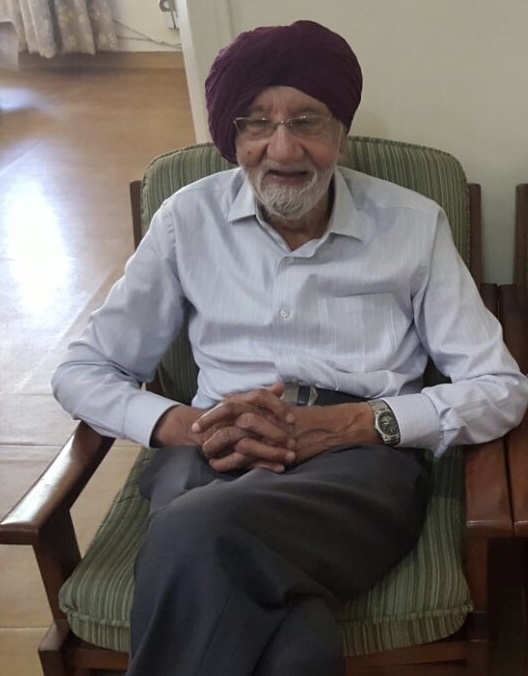 Last Sunday night came the news that Mamaji Gursharan passed away. Although this is a shocking and sad news, but knowing that he’s returned back to our maker (to a better place away from the pain and suffering of this physical plane) is comforting.
 Erudite Kahani