Happy Holi..

group of people having neon party
Photo by Marcin Dampc on Pexels.com

Today in India, Holi (the festival of colors) is being celebrated.  Although I am not there physically, I am reminiscing of all the good times I have had playing Holi with my family and friends.  I vividly remember putting colors on each other, throwing/bursting water balloons, using pichkaris (water guns) filled with colored water on suspecting and unsuspecting folks and yelling ‘Holi Hai’ was something I looked forward to all year.  Everything about it was magical to me!  We wore our oldest clothes (so that we could chuck them after the festivities), assembled in the gardens of the Air Force Mess, sang ‘fun’ songs with bad dholki, tried to drink beer and eat ‘bhang’ pakoras (which was strictly prohibited by my parents; with my mother appearing anytime we attempted to try it.  I swear she had 6th sense…lol!), made fun of all the intoxicated folks, etc.  I miss those good old days but I live vicariously thru my friends 🙂

My Maternal Lineage…


While perusing thru some compelling documents, my mother started reminiscing about all the stories of her family lineage. Most fascinating were the tidbits of her family history especially how her ancestor (her great-grandfather) came to become the Prime Minister of Nabha Riyasat, his rise as a prominent figure and advisor to Raja Hira Singh, his untimely death (which could be considered his murder), plus how his brother-in-law’s Riyasat of Ladwa was confiscated by the British and his sister’s imprisonment in the Govindgarh fort. Very riveting stuff!

Apparently, during the wedding of his sister to Raja Ajit Singh, the Regent of Ladwa state, that Sardar Dewa Singh (this grandfather) came into prominence and notability. His effortless handling of three Raja’s (rulers of Patiala, Nabha, and Jind) that accompanied the ‘baraat’ is what impressed the Maharaja of Nabha. My mother shares that Beji (her mother) stated that one of the servant or minor official complained about his accommodations to Raja Hira Singh, to which the Raja responded by saying ‘most folks can’t handle one King, and he handled three’. His popularity with Raja Hira Singh was so immense that other officials were jealous of his closeness with the regent, and that my have been the reason for his untimely demise from excessive leaching (Leech bloodletting was a common catchall treatment at that time). He died in Shimla in 1881. His wife was Mai Sukhan (who hailed from Bakarpur, Ambala), and they had five children – three sons and tow daughters. His youngest son, Bhagwan Singh, was my mother’s grandfather and my great grandfather!

Mamaji Gursharan…

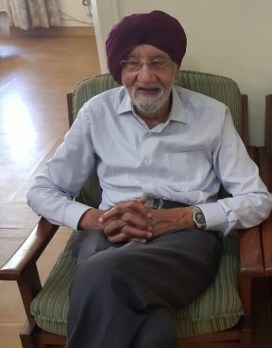
photo-2019-01-25-15-57-17Last Sunday night came the news that Mamaji Gursharan passed away.  Although this is a shocking and sad news, but knowing that he’s returned back to our maker (to a better place away from the pain and suffering of this physical plane) is comforting.

How do I pay homage to this larger than life Uncle?       He was an extremely accomplished and dynamic human being.  Born on 19th November 1930, at home in the ‘Kila’ in Gujjarwal, he was 3rd of seven sibling (with my mother being the youngest and 15 years his junior).  He finished his FSc from Government College Ludhiana, and went to Punjab Engineering College Roorkee (which later relocated to Chandigarh), where he graduated as a ‘Civil Engineer’.  I remember him sharing that this was a time when even the engineering students got assigned butlers’ (a legacy pf colonial India!).

His first job was the construction of the ‘Bhakra Dam’, where he worked under Harvey Slocum, a renowned American civil engineer and dam-building expert (famous for building the Grand Coulee Dam in Oregon).  Bhakra Dam was called the “New Temple of Resurgent India” by the first Prime-minister of Independent India and freedom fighter, Mr. Jawaharlal Nehru.  His career also took him to Ghana and Iraq, where he helped these governments/companies with irrigation, dam and/or canal building/management expertise.  He retired as the Chief Engineer of Punjab.

As I write this blog, an ‘Akhand Path (continuous prayers)’ have commenced.  Although I can’t be there for his final ‘Antim Areas and Bhog’, I want to commemorate him, this amazing man, my beloved Mamaji.  I love you Mamaji, and one day we will all meet again in the ethereal plane.  Till then God Bless and ‘Shabba Khair‘. Continue reading “Mamaji Gursharan…”

Lohri

Yesterday was ‘Lohri’, so we went to the local Gurudwara to celebrate.  It was filled to capacity and it was lovely to see all the couples with newborns, plus all the newlyweds, being honored and celebrated.  In addition to the ‘Divan’ (court/congregation of the Guru), with ‘Kirtan’ and ‘Shabads’ (holy hymns) and ‘Hukam’ (Guru’s lesson of the day) obtained from the Sacred Book, there also was the bonfire ceremony where we tossed (as well as ate) sesame seeds, peanuts, ‘rewaries’ & ‘gachak’ (peanut brittle) and popcorn into the fire.  People sang traditional ‘boliyan’ (songs) and danced (performed ‘Bhangra’).  It certainly was very joyous and I am glad that I went.

Apparently, the festival of ‘Lohri’ is always celebrated on January 13th each year (which is unique as it doesn’t follow the traditional lunar calendar).  It celebrates and honors ‘Dullah Bhatti’ who was a dacoit who stole from the rich and gave tor the poor (aka the Robin Hood of Punjab), and most importantly saved young women from the invaders or cruel abductors, who used them to fill their harems or sold them as sex slaves.  He then would get them married and for that reason the festival of Lohri always celebrates the newly weds and newborns.  For these reasons, the most popular song sung during Lohri commemorates him and the lyrics goes as following –

Sunder Munderei. Ho! 
Tera Kaun Bechara. Ho!  
Dullah Bhatti Wala. Ho!
Dullah Dhi Viyahi, Ho!  
Sher Shakar Pai. Ho!
Kuri de Mamme Aaye! Ho!
Unane Churi Kuti, Ho!

My friend also pointed out that this ritual also salutes the fire gods and when we toss the sesame seeds, we call out ‘Udham Aaye, Dalidar Jaye. Dalidar Di Jaad Chule Paye‘ (Energy come, laziness depart.  Roots of laziness gets thrown/burnt in the fire’.  This revelation was amazing as it reminded me of the fire jumping ritual that some of my Persian friends did during their festival for fire (Chaharshanbe Suri) where while jumping over the fire they said something like ‘take away my paleness (my troubles) and give me your redness’.  In that part of the world, do we have common festivals?  Regardless, Happy Lohri everyone!

The Raj, Wars and My Paternal Ancestors…


This slideshow requires JavaScript.

Last month was special.  I came across some of my ancestor’s military service documents, commendations, awards/medals, etc., for the empire days (majority of which didn’t survive partition of India and the great migration that ensued in 1947).  I was most excited about two notable documents – First, being a 130 year old enlistment certificate from the reign of Queen Victoria of my great great grandfather Sawan Singh, and second, a WW1 commendation certificate of my great grandfather Indar Singh signed by Sr. Winston Churchill (the then secretary of war). This month we also celebrate the 100th Armistice Day marking the end of World War One.

It reviewing the documents, it appears that on October 5th, 1888, my great- great- grandfather Sawan Singh enlisted in the ‘34th Sikh Pioneers’, an infantry assault regiment of the British-Indian army. I remember Manji (my great grandmother) telling us that Babaji Sawan Singh had a very long and illustrious service, that he was a Subadar-Major (which is the highest rank an Indian could attain in the Imperial armies at that time), and that he was awarded a land grant of 5 Murraba (125 Acres) in the village of ‘GB Chak No. 232’ in Lyallpur district (now in Pakistan).She also talked about all the memorabilia he brought from his various deployments, especially the Chinese storage boxes (Sandooks) and Peking Silk that had to be left behind during the hasty migration of 1947.  My research shows that some of his deployments would have been ‘relief of Chitral’ (1897), ‘Tirah Campaign’ (1897-1898), China ‘relief of Peking and Tientsin’ (1900-1901) following the boxer rebellion, etc.

Indar Singh, my great grandfather, also followed in his father’s footsteps and enlisted in the 34th Sikh Pioneers.  During the ‘Great War’ of 1914-18, his regiment (part fo the 3rd Lahore division) was first deployed on the Western Front and winning the battle honors of Festubert, St Julien, La Bassee, Armentieres, Givenchy, Neuve Chapelle, Ypres, France and Flanders, and then moved to the Middle East in the Mesopotamia Campaign where he fought against troops of the Ottoman Empire.  Manji used to mention that he showed great bravery in the battlefield, and despite being wounded himself, carried his commander to safety.  He returned home shortly thereafter as a war-casualty, and later succumbed to his injuries at home, during the month of ‘Kata’ (Punjabi month that straddles October/November), in 1918 during the deadly ‘Spanish Influenza’ outbreak.  Although Manji was pregnant with my grandfather when he passed away (so he never got to see his son).  Manji stated that he was tall (6’ 4” or 6’5″), good looking, and also a Subadar-Major like his father.  She would also talk about her wedding (she being his second wife), going to Ambala Cantt (the base of his regiment) where he was stationed as a Jamadar-Adjutant (which she pronounced Jamadar-Jitten).  She also shared of her good relations with his first wife Rattan Kaur and her stepdaughter Kamal Kaur (my father also remembers Bhauji Kamal Kaur very fondly).

Although these artifacts & stories made me aware of their rich lives and legacies, it also makes me wonder how they would have been in person.  Although history may not give them the proper dues, I for sure have a greater appreciation, respect and awe of their bravery, sacrifices, and courage.  I salute them and honor their DNA that runs thru my veins.


Mangoes…

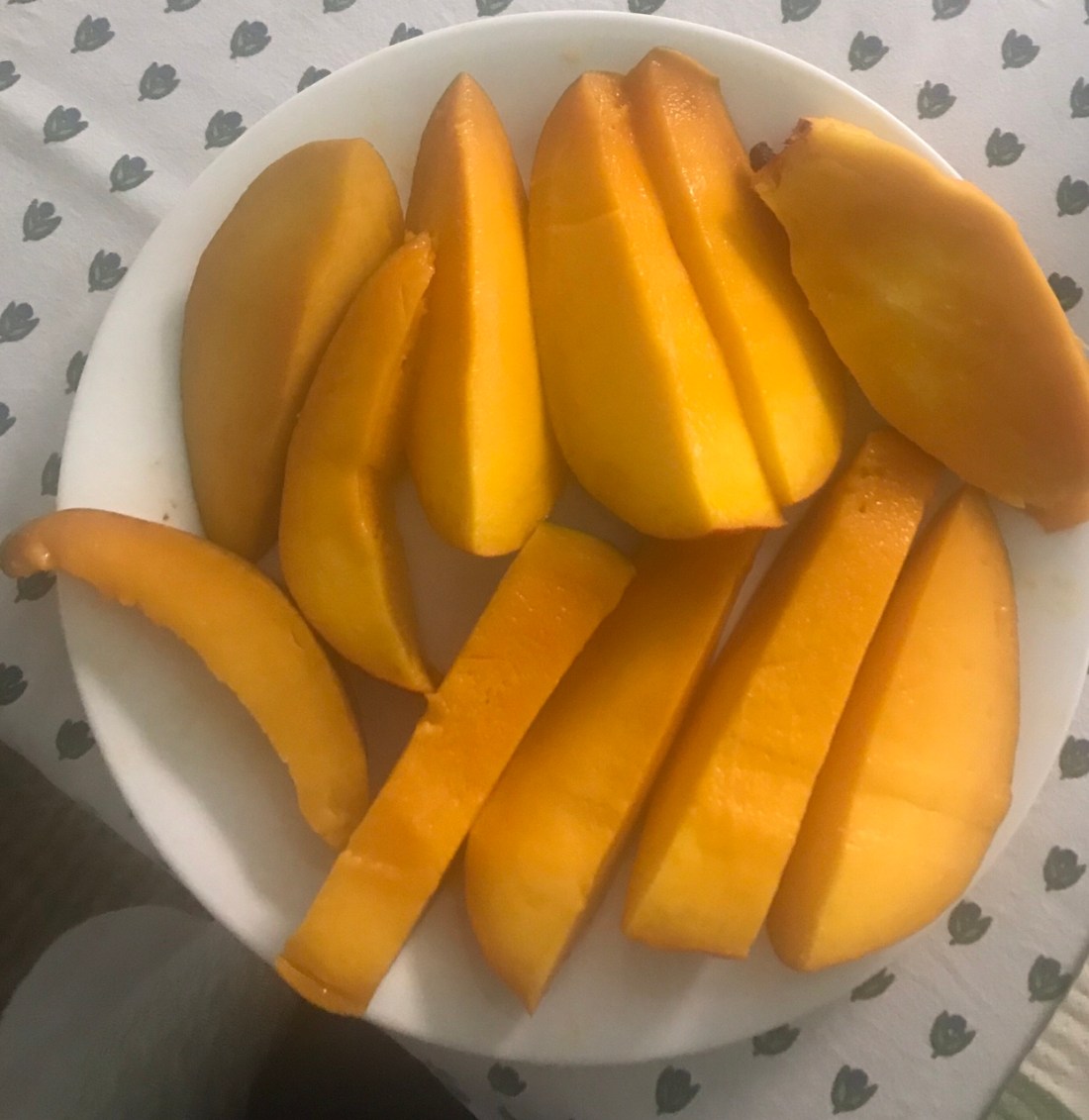
Went to Artesia over the weekend and saw first hand the ‘mango frenzy’!  $5 boxes of mangoes were flying off the shelf, and of course, I had to get one (or three) for myself. As soon as I sunk my teeth into a juicy slice, it took me right to my grandparent house and summer vacations in Moga.

Growing up, each of our summer vacations were with ‘Manji’ (my great grandmother), ‘Bapuji’ (my paternal grandfather), ‘Bibiji’ (my paternal grandmother), but also with our cousins – Ritu and Sunny (who also came with my uncle (chachaji) and aunt (chachiji). I distinctly remember that as soon as we arrived at my grandparents house, Bapuji would take his beloved cycle to the market and bring back boatload of mangoes. Which were then submerged in buckets of water to cool down (there was no refrigeration due to frequent and long power cuts which would render the refrigerator useless). The happiness on our grandparents faces when we are those mangoes was priceless! So summer was all about Moga, heat, grandparents and Mangoes 😊

Tamas, it’s impact on me…

I wasn’t raised in Punjab where a lot of familial, societal and environmental exposures & influences would have shaped my upbringing.  Instead, my father’s Indian Air Force (IAF) career, made for a rich but unconventional childhood.  Due to his postings, we generally moved every two years to live in a different part of India and got to experience a brand new culture. For instance, we could go from an urban city like ‘New Delhi’ to rural/remote ‘Chabua’ in upper Assam surrounded by tea gardens and jungles.  These Air Force stations were truly a melting pot of various cultures of India.  Although, Sikhs and Punjabis had a robust representation in the Indian Military, my exposure to Punjab’s language, food, culture, religions, people, etc., took place mainly during summer vacations spent in Punjab with my grandparents and other relatives (where we would hear about our family roots in west-Punjab, now in Pakistan),  listening to my parents and their friends conversing in Punjabi, and going to the Gurudwara for the ubiquitous holidays or during the weekends.

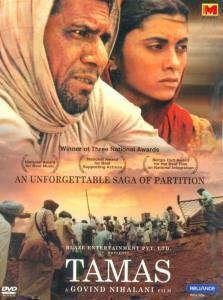
41V5FqnJs9LThen in 1988, came this 10-part miniseries called ‘Tamas’, directed by Govind Nihalani (based on a 1974 novel of Bhisham Sahni of the same name).  This TV film depicted the 1947 partition of Punjab that resulted in Sikh-Muslim-Hindu genocide (part of India’s independence from Great Britain that saw the creation of Pakistan).  This series had a profound and deeply transformational effect on me.  Not only was I exposed to certain truths and circumstances, I realized that what I thought to be my grandparent’s folktales was in fact my family’s story and reality (how they had to leave all their possession in a haste and start a new life in India-Punjab with not much to their name).  I understood the family’s (and punjabi people’s) deep loss, suffering and true grit that got them thru this ordeal and transformed them as people, culture and clan, and grasped how I was part of that fabric and needed to honor their bravery and sacrifices.

In addition, the series had a very powerful ‘Shabad‘ (hymn) ‘Deh Shiva Bar Mohe Hai‘ sung exceptionally by ‘Singh Bandhus’ (Mr. Tejpal Singh and Surinder Singh), which not only evoked in me a lifetime love for hindustani classical music but this awe-inspiring shabad and its stalwart wordings transmogrified me forever.  This is a prayer that asks the Almighty to give the follower a life of courage and bravery of the highest levels of righteousness, and never fearing, hesitating, shying or shirking from undertaking virtuous acts that defend human rights including protecting poor, weak and/or needy.  

Manji, Our Matriarch…


My great-grandmother Ajaib Kaur, whom we lovingly called ‘Manji’ (pronounced maa-jee), was our hero.  She was not only loving and kind but also brave and respected by all.  Although her life was tough, she never complained of her hardships, challenges or restrictions, which were many, including, loosing her husband early from injuries sustained during WW1;  loosing everything (home, farm, livestock, family, friends, etc.), becoming displaced, ferrying a bullock-cart with her son (my grandfather Ranjit Singh) for over three months thru dangerous carnage of 1947 partition of India, and starting a new life as a refugee with nothing; becoming paralyzed on the entire left side of her body in the early 70’s rendered her house-bound and with mobility challenges, till her passing in 1991; etc.

She practically raised my father and he in return has great love, respect, devotion, adoration, and reverence for her.  He has very fond childhood memories of her including how she would be worried and look for him whenever he would run late from his errand of bringing ‘pathe’ (fodder for the cattle), and how he could spot the light from her lantern in the field; how she told him stories of the Gurus – their glory and sacrifices; how she was strict regarding studies; how she made the best ‘dahi-vada’ that even his teachers would ask for (and how he had to make a special run home to bring it them on days Manji made them); how she was immense respected in the village that everyone irrespective of age called her ‘Bhua’ (father’s sister); etc. My memories of her is seeing her happiness each time we visited her, and how talked to us, gave us her wisdom, allowed us to groom her, and play with her rustic wheelchair (sometimes with her in it).

What we know of Manji is that she was born in Badhni Kalan village near Moga (where the family also settled after partition) in the Dhaliwal Clan to Nidhan Singh (date of birth and mother’s name unknown).  It is said that a ‘Gwad’ named ‘Dhana Pati’ in the village was named after her father (‘Gwad’ or ‘Pati’ is part of the village where people of the same clan live).  She was married to my great grandfather Inder Singh and was his second-wife and bore him a son (my grandfather Ranjit Singh).  Babaji Inder Singh is believed to have succumbed to his injuries around 1934-35 during the  ‘Kate Di Bimari’ (plague epidemic) in Punjab.  

In closing,  Manji was a woman of grit, strong values, and faith.  She was steadfast, disciplined, clear-headed, committed, realistic, resilient and responsible, who believed in honest work, strengthening family bonds/connections and enduring relationships. She was a wise woman who everyone went to for advice, direction and reassurance.  We, her descendants, not only thank her for her dedication, perseverance and steadiness, but also for being a strong role-model and inspiration to how to live life with resolve and tenacity despite life’s challenges and setbacks.  Thank you Manji for everything and we all love you.

Our Understanding of God Consciousness (Part 3 of 3)

Lastly we discussed how God-consciousness is comprehended by people.  Some worship God, some curse God, and yet others who don’t believe in the existence of God.  This my father stated is dependent on one’s ‘Mat’ (intelligence, wisdom, knowledge and/or experience), which dictates how they worship, remain in reverence and gratitude, or don’t worship or believe in God at all.  Also, of the believers, how many remember God during good times but most remember him/her in times of need or dire straits? 

God – Has Anyone Seen It/Him/Her? (Part 2 of 3)

E9982A10-85D9-4B3B-BD63-C79A1A28154A

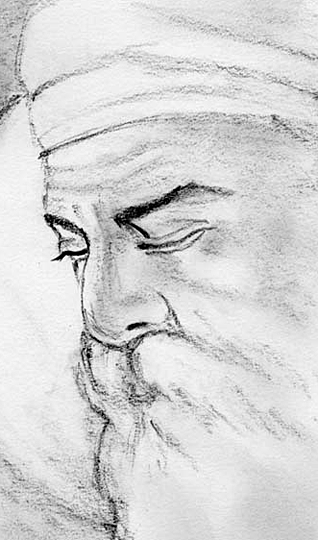
Next, our conversation turned to – if anyone had really seen God? Guru Nanak in the following prayer, contemplates on God’s Grace and his/her greatness, but also points to our limited understanding of God and God-consciousnoss, and what we know of God is from hearsay.

‘Sun Wada Aakhen Sabh Koe, Kewad Wada Ditha Hoe’ 

We only know of God’s greatness upon hearing from other people, but how great You truly are, can only be described by someone who has really seen You.

Keemat Paae Na Keheaa Jai, Kehne Waale Tere Rahe Samae’

Nobody can put a value on You, nor can You be fully described.  Those who try to describe Your greatness loose their own identity, merge with You, and get fully engrossed into you.

‘Wade Mere Sahiba, Gaher Gambhira Gun Gahira. Koi Naa Janae Tera Keta Kewad Cheer-a. Rahao’

Oh my almighty God, you are of unfathomable depth, you are an ocean of excellence, full of virtue, but no one really knows how vast is Your expansion. Ponder upon this!

‘Sabh Surt Mil Surat Kamaee, Sab Keemat Mil Keemat Paaee.  Giani Dhiani Gur Gur Haaee, Kehan Na Jayee Teri Til Vadeae’

To find Your greatness, many sages and yogis went into deep meditation, concentrated on you again and again.  Many theologists and philosophers, tied to put value on You (and your creation), by thinking of some entity that could equal You.  All have tried to describe God but none are able to tell even an iota or speck of Your greatness.

‘Sabh Sat Sabh Tap Sabh Changai, Ian Siddhan Purkhan Kian Wadian.  Tudh Vin Sidhi Kinae Na Paaeeyan, Karam Milaan, Nahi Thaak Rahaeeyan’

All the good deeds, all the meditations, all the virtues, all the spiritual powers of holy men, and all their achievements, is not be possible without Your Grace.  Without Your blessing, no one could achieve any greatness or success.   These are obtained by Your Grace and cannot be stopped.

‘Aakhan Wala Kia Vecharaa, Sifti Bhare Tere Bhandaraa.  Jis Tu Deh Tisae Kia Charaa, Nanak Sach Swaranhara’

Your Creation is full of limitless virtues, how can a poor soul describe Your greatness? Whom You bless with Your Grace, nobody has the power to put an obstruction in his path. Nanak says, You, the ever existent are the savior of that fortunate one.


Next: Part 3 – Our Understanding of God Consciousness