


While perusing thru some compelling documents, my mother started reminiscing about all the stories of her family lineage. Most fascinating were the tidbits of her family history especially how her ancestor (her great-grandfather) came to become the Prime Minister of Nabha Riyasat, his rise as a prominent figure and advisor to Raja Hira Singh, his untimely death (which could be considered his murder), plus how his brother-in-law’s Riyasat of Ladwa was confiscated by the British and his sister’s imprisonment in the Govindgarh fort. Very riveting stuff!
Apparently, during the wedding of his sister to Raja Ajit Singh, the Regent of Ladwa state, that Sardar Dewa Singh (this grandfather) came into prominence and notability. His effortless handling of three Raja’s (rulers of Patiala, Nabha, and Jind) that accompanied the ‘baraat’ is what impressed the Maharaja of Nabha. My mother shares that Beji (her mother) stated that one of the servant or minor official complained about his accommodations to Raja Hira Singh, to which the Raja responded by saying ‘most folks can’t handle one King, and he handled three’. His popularity with Raja Hira Singh was so immense that other officials were jealous of his closeness with the regent, and that my have been the reason for his untimely demise from excessive leaching (Leech bloodletting was a common catchall treatment at that time). He died in Shimla in 1881. His wife was Mai Sukhan (who hailed from Bakarpur, Ambala), and they had five children – three sons and tow daughters. His youngest son, Bhagwan Singh, was my mother’s grandfather and my great grandfather!
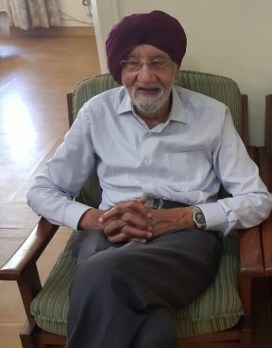 Last Sunday night came the news that Mamaji Gursharan passed away. Although this is a shocking and sad news, but knowing that he’s returned back to our maker (to a better place away from the pain and suffering of this physical plane) is comforting.


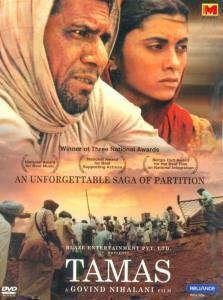 Then in 1988, came this 10-part miniseries called ‘Tamas’, directed by Govind Nihalani (based on a 1974 novel of Bhisham Sahni of the same name). This TV film depicted the 1947 partition of Punjab that resulted in Sikh-Muslim-Hindu genocide (part of India’s independence from Great Britain that saw the creation of Pakistan). This series had a profound and deeply transformational effect on me. Not only was I exposed to certain truths and circumstances, I realized that what I thought to be my grandparent’s folktales was in fact my family’s story and reality (how they had to leave all their possession in a haste and start a new life in India-Punjab with not much to their name). I understood the family’s (and punjabi people’s) deep loss, suffering and true grit that got them thru this ordeal and transformed them as people, culture and clan, and grasped how I was part of that fabric and needed to honor their bravery and sacrifices.


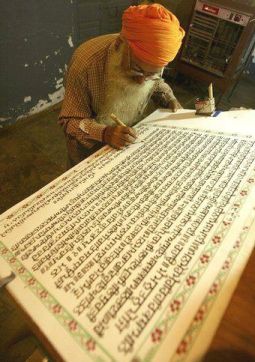 Today my father and I contemplated on Persian words, ‘Jamaal’ (delicate beauty of God or ‘komal sundarta‘) and ‘Jalaal’ (the glory of God), that is often found in Guru’s bani. He shared that the Divine’s Jamaal or beauty can be experienced by adhering to five virtues of – truth (sat), bliss/contentment (santokh), compassion/mercy (daya), love (pyar), and renunciation/sacrifice (tyag).
 Erudite Kahani