There is no doubt that the current global COVID-19 health crisis is fluid, perplexing, dramatic, unsettling, paralyzing, and all-consuming; with countless images and data of people hooked up to ventilators or in body bags, healthcare workers & first responders in full PPE, (exhausted in some cases), deserted and empty streets, masked and gloved people and officials, rumors of shortages, etc., are omnipresent 24/7, in all news outlets, social media, concerned welfare calls, expert opinions and analysis, governmental or public health briefings, in unemployment numbers, in obstructed routines, etc. Although some details are useful and informational, inspiring and even funny, but mostly forbidding, confusing, and conflicting! What’s confounding is the level of disruption, uncertainty, unpredictability and paranoia that prevails. I wonder why our emotions are so heightened this time around? Doesn’t the seasonal Flu kill more people annually? What about more deadlier outbreaks like Swine Flu, SARs, MERs and Ebola, haven’t they become somewhat unmemorable & an illness of the past? It’s odd how we are indifferent and unconcerned to some maladies, yet so irrational and fearful of others? Is it because its novel (no pun intended) & unfamiliar, and we haven’t developed any coping mechanism for? Or is it more innate and is triggering our reptilian brain and our instinctive survival mechanism? Could it be even more primordial, perhaps it lays bare the cosmic truth about death, that we ultimately are not in control of how and when we die?
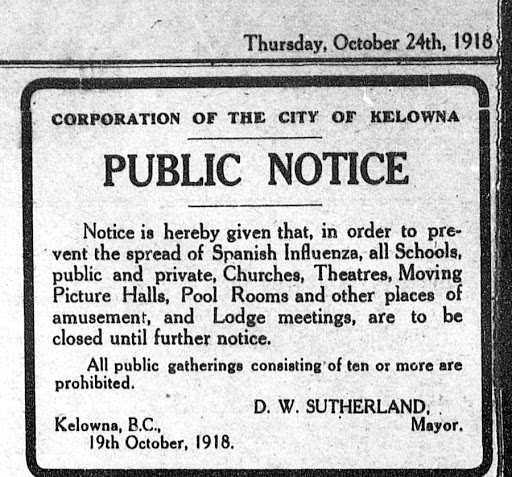
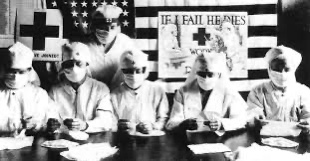
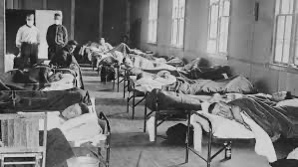
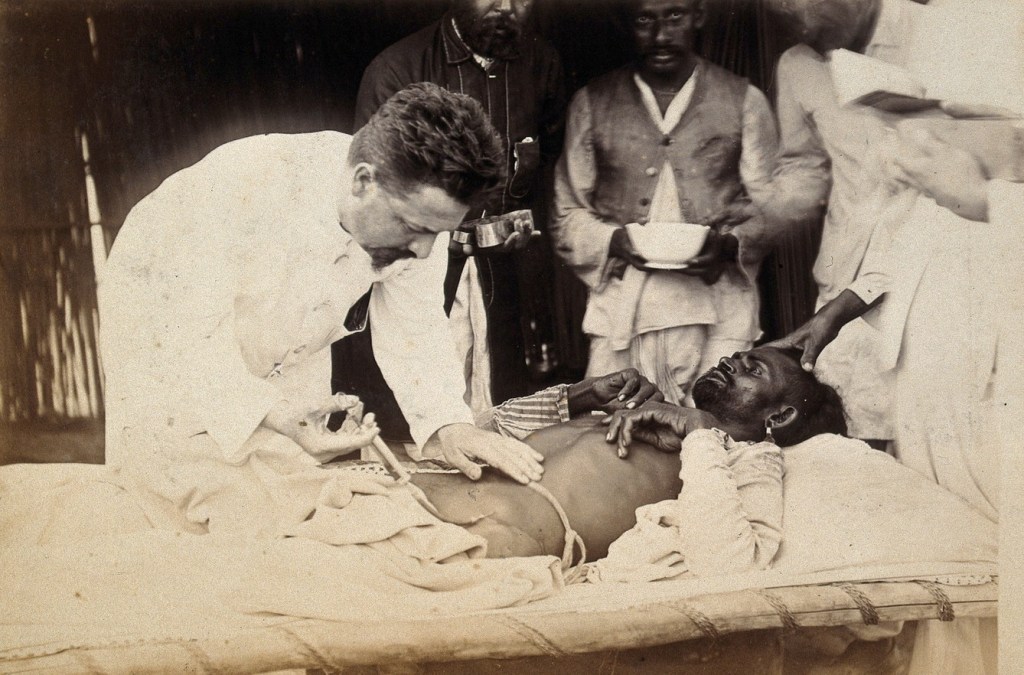
Also, what’s uncanny is the similarity that exists between ‘COVID-19’ crisis and the ‘Spanish Flu’ Influenza’ outbreak from only a 100 years back! Both respiratory diseases (one coronavirus and the other H1N1) are so analogous that barring the period attire, one can easily swap pictures, posters and advice, and in my opinion one wouldn’t even know the difference! Also, now overhearing my father, recount over the phone for his friends, the suffering from fall/autumn of 1918-19, as shared by Manji (his beloved grandmother who also lost her husband to this affliction within a short span of returning home to recuperate from the injuries to his spine that he sustained fighting in WW1), I hear him say, “Manji said there were so many deaths, when you returned from one funeral, the next funeral would be ready for cremation”. I was stunned by this revelation and the poignant, sobering and soul-stirring picture these works painted, that are also so reflective of what we are seeing with the disturbing COVID-19 scenario! Unfortunately that was the reality of the times and a common suffering, misfortune and depravity that many people and families share globally. I also noted that he called the infirmity ‘Katak di Bimari’ or ‘Illness of Katak’ (Katak, in Punjabi is the eighth month of the Desi calendar, 30 days long, with the first day falling on October 15th and the last day on November 13th), which my father later clarified that because there was absence of formal education and even lack of English language knowledge in the masses, perhaps Manji (and the locals) described this pestilence in Punjabi dialect which they were familiar & comfortable with, and one which made sense to them.
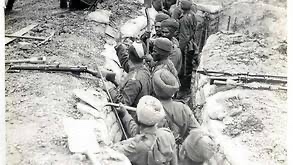
As I further my research into the perils of ‘Spanish Flu’ in India, I am finding that although it is very well pictorialized in the West, photos from Indian subcontinent was hugely lacking. This felt odd given that Indian deaths accounted for 1/5th of the 50 million deaths worldwide! Also, India had a large contingent of soldiers in WW1 and in the epicenter France where this disease broke out, what was I missing? I know experts called it the ‘forgotten pandemic’ and it certainly seemed true from the Indian experience. Also now that are read these two write-ups – 1) Arnold David’s paper titled ‘Death and the Modern Empire: The 1918-19 Influenza Epidemic in India’, where he states that “the impact of the disease was overshadowed by the prior encounter with bubonic plague, by military recruitment and the war, and by food shortages and price rises that pushed India to the brink of famine”, and 2) Angana Chakrabarti’s article “102 yrs before COVID-19, India braved The Bombay Fever pandemic that killed over 10 mn’, she calls ‘Spanish Flu’ ‘Bombay Fever’ or ‘Bombay Influenza’! I wonder if the depravations that existed in colonial India were so grave that people didn’t see ‘Spanish Flu’ as a distinctive disease and also the various colloquial names used to describe the disease takes away from knowing the true human tragedy in India? While we ponder on this, there is no doubt that Spanish Flu came to India in three waves (like the rest of the world), mainly –
The first wave manifested in May/June 1918 in the dock workers at the Bombay port. It lasted about 4 weeks and devastated Bombay (or Mumbai) and which the local British health officer, J.A. Turner, professed at the time “it came to Bombay like a thief in the night” (Chakrabarti, 2020). Symptoms reported were fever, bone pain, bronchial inflation, congestion, eye pains and a general feeling of malaise.
The second wave, the most lethal & fatal, targeted young men between ages of 20 to 40 years old (of which my aforementioned great-grandfather was one of its fatalities), came to India and Punjab in September 1918 and lasted till December 1918.
The third and final wave came in 1919.
In closing, although it’s unknown with COVID-19, what the next few days, weeks or months are going to look like, or how it may show up in history’s storyline & timeline, I am confident in the human spirit and its resilience. Also, history is witness that mankind has overcome many endemics, epidemics and pandemics, so certainly we will prevail over this too. For now, please head the warnings of the experts, wash your hands, and stay safe.
Interview by Sufiyan Siddiqui & Lindsay Eriksson-Siddiqui (for1947 Partition Archive.com)
This weekend my father was interviewed for the ’1947 partition archive’ by Dr. Sufyan Siddiqui and his lovely wife Lindsay Eriksson-Siddiqui. They were a delightful couple who came all the way from Denver to videotape my father’s recollections of life and events before-, during- and after- the partition of India, that saw the creation of two independent countries on religious lines (Muslim-Pakistan and Hindu-India). This decision to split India by the British (Mountbatten), Indian National Congress leaders (Nehru, Patel) and Muslim League (Jinnah) triggered one of the bloodiest upheavals and the biggest mass-migration of humans in modern times. I characterize it as a unspoken genocide/holocaust, as growing up, it was not something that was taught in the school curriculum, one didn’t see documentaries or shows pertaining to it, not much seemed to be written about it in popular media, as a matter of fact neither did the government or national leaders talk of it. However, it was omnipresent and always in the background of the families who went thru it and was often talked about to us by our grandparents regarding how life used to be before, the people, friends, customs, what they lost, the travel to India, the hardships, etc. So, my family and I are very thankful to Sufiyan and Lindsay who volunteered their time and effort to document my father’s version of events that sheds light to a common misfortune both these countries suffered. Amazing part for me was how much my father remembered given that he was a toddler of 4 years old at the time of partition, perhaps too you to recall the events. In talking to Sufiyan & Lindsay, we realized that humans tend to remember traumatic events that they witness irrespective of age. Although I will try to post the interview if allowed, in the meantime, following is what I was able to capture of his recollections –
Pre-Partition
Subedar Sawan Singh (middle), Subedar Indar Singh (Right)
My father was born in the village of Chak 232 GB, Lyallpur in undivided Punjab. His family consisted on his grandmother and matriarch (Ajaib Kaur), father (Ranjit Singh), mother (Mohinder Kaur) and two younger brothers (Sukhbir and Malkiat). This village was a Sikh village, part of the canal colonies & composed mostly of ex-soldiers of the British-India armies. The family had migrated there from Jagraon when his grandfather Subedar Indar Singh of 34th Royal Sikh Pioneers was awarded 5 Murabaas or 125 acres of land (He was a veteran of WW1 who participated in the German offensive on the western front and the Ottoman empire in Mesopotamia).
He also remembered that his father bought land in the village of Chajwal (Chak 172 GB), a predominately Muslim village, where the family lived until they had to leave when it got too dangerous and unsafe for them. He vividly recalled both homes- with the house in Chak 232 being ‘Kacha’ (mud construction), whilst in Chajwal (which was newer) had a ‘pakka diwan’ (cemented formal living area) and the rest was ‘Kacha’. He remembers that the living area was elevated and away from the animal area, and they kept buffaloes for milk, oxen to plough the fields, and goat etc., at home itself. There also wan as area for grain storage at home and that they grew wheat and cotton in their farms/fields. He talked about being self-sufficient and didn’t have to buy too many things from the market including cloth/fabric (Khadar) for clothes was weaved at home by his mother and grandmother. Although he was not going to school, he remembered that the nearest school was 6 miles away in ‘Satiana Bangla’. His fondest memory seemed to be that of a gramophone that served as entertainment for the villagers, where each night, his father would put it out and the whole village gathered to listen to the old records. He remembered it to be a happy childhood where everyone supported and respected each other irrespective of their religious, political ideologies or economic status. He fondly remembers the ‘Motbar’ or headman of the village whose name he did not recall during the interview and later remembered him to be “Nur Muhammad” who considered his grandmother to be his sister. Another recollection that he remembered later on was that there was ‘Gernali road’ (or General’s road) that ran close the the village and was meant for the british, and on which he saw an occasional jeep once in a while, and was kept pristeen by a road roller. The locals were not allowed on that road so the Indians travelled on a parallel road which was not as nice (that road now seems to be called ‘Tadlianwala road’ in the current map of that area!).
His recollection of when things started to heat up was when his father returned from Lyallpur (now Faisalabad), where there was a firing and from which he saved himself by hiding under the bus. Upon his return back, he told the village elders that the tide is turning and time would come soon when they will all have to leave the village for good. The elders didn’t believe him as they considered him too young to assess the situation! It’s during this time, my father remembers going to the historical gurudwaras’ of Nankana Sahib and Panja Sahib where he recalled putting his hand in the imprint of Guru Nanak’s hand, as it was uncertain when and if they would ever return.
Partition He recalled that things deteriorated fast after that. He recalled the day the headman ‘Nur Muhammad’ came to Manji (his grandmother Ajaib Kaur) and said that things no longer are safe. Although he guaranteed them that none of the villagers would harm them but could not vouch for folks outside the village (which he was hearing of). Manji asked how much time would they have to pack up? He told that they just had 30 minutes, and that he will accompany them right to up to the canal and would ensure that get safely into Chak No. 232, the Sikh village. To their bad luck the wheels of the ox-cart were removed for greasing, so they could only take whatever they could grab and carry in their hands (which was not much), and that Nur Muhammed kept his word and only left when they were safely inside Chak 232.
Per my father’s recollection, the first attack on the village was by ‘Janglees’ (the local jungle folks/nomads) who came beating the ‘dhol’ (Indian drum) and were being led by a leader who was dancing on the mule. This attack was thwarted by the ex-soldiers who fired and shot the leader that scattered his followers. However, the attacks on the village kept mounting and my father clearly remembers that women were instructed to kill themselves by jumping from a tall building (and not be captured alive in case the defenses of the village fell). He also remembers his grandmother’s panic as during one of the attacks he got separated and hid, and her refusal to go into safety unless he was found! He was eventually located when the curiosity of a child got him to peek outside to see what was going on and someone spotted him. Eventually the decision was made to leave for India to Dhilwan on the river Beas.
This was done in two ways, one where young women, children, elderly and handicapped went via a truck, and that is how he travelled with his mother and two younger siblings. It took them 5-6 hours to travel to East-Punjab. The route they followed was along the ‘Grand Trunk road (GT road) and went thru Lyallpur, Lahore, Amritsar, Jullundur and Beas, and my father remembers that there was excitement in the air when they reach ‘Balloke Headworks’ a dam site, on their route to India. Along the way my father remembers seeing some dead bodies, some shot, some decaying! The other was via a ‘Kafila’ (caravan) of ox-cart, horses, etc. that carried household items and that is how his grandmother and father came (they agreed to bring an ox-cart for someone provided they could also take their stuff, given they were not able to bring their ox-cart in their hurry to leave Chajwal). It took them over 3 months to reach Dhilwan given the slow nature of ox-carts to move. In the meantime, there was no news of them until one day news came that the ‘Kafila’ had reached the village and that is how they reunited as a family.
Here he also remembered an enduring memory that is etched in his brain. Apparently, to get to Dhilwan from Beas (where the truck dropped them), this stretch needed to be done on foot. However, they were told that a large Muslim Kafila has encamped on the side of the road and it would be safer if they went via the bus. My father remembers seeing this large caravan resting before it could resume its journey towards Pakistan, however, this was the monsoon period in the subcontinent with the torrential rains deluging the landscape, and as a result the Beas river started to swell. At night time, my father remembers hearing the people’s shrieks as they were being swept away by the flood waters! Another vivid story that he remembered during this time was that the floods which was chest high also caused food shortage. He remembers that one of the shopkeepers was stockpiling rice, sugar and soda (washing detergent) intended for the black market, which he refused to sell or give to these starving refugees. Only when the flood water started seeping into his storage area, he made a deal to split whatever they helped save 50/50. This is what got them thru these days where they ate raw rice mixed with sugar to survive!
Post-Partition
Once the family reunited, the arduous task of re-settlement began. The decision was made to move to the village of ‘Badhni Kalan’, which was my father’s grandmother’s parental village and where she had some land on her name. They first moved in with some of her extended family members (given she was the only child) and these relatives really welcomed them. Next came to decision to acquire their own dwelling, so it made sense when it was suggested that being refugees, they take over a house that was abandoned by a Muslim family who relocated to Pakistan. One such house was located which belonged to a teacher by the name of Sher Muhammed. Only problem was that it was being used for storage by the ‘Jan Sangh’ group, a local Hindu political party! When approached, they reluctantly agreed but told them to return the next day to get possession. However, upon their return the following day, they found that there was no one to receive them and hand them the key, instead the house was bolted shut and sealed from inside by a layer of bricks. My father recalled that then his hot-blooded uncle broke the lock, scaled the house, got inside and opened all the doors, and that is how they got possession of the house. Also, this was pre-dominantly a Hindu neighborhood so they did not want Sikhs to move in, as they thought they will be rowdy and misbehave with their women, so each night thereafter they would congregate and hold demonstrations outside their house. They even got a police constable to come each night but to the family’s good luck they had a relative at high police post in Moga (the neighboring town) so none of the police constables intruded. This was also a time when a huge tragedy and setback happened for the family. His father got admitted to the hospital due to Typhoid (apparently a doctor told them they were refugees and did not have much money, so their best bet is to go to the hospital) and during this time his one-year brother Malkiat got dysentery and he died from it. This news was kept from the father for a few days until he started to ask for him. My father recalls witnessing his grandmother crying profusely, covering her face so no one can see her grief, and took the body for burial (as infants were buried as opposed to cremation).
Manji, Sukhbir (Left) and Harkirat (Right)
Front- Mohinder Kaur (Mother) and Ranjit Singh (Father); Back – Sukhbir (Left) and Harkirat (Right)
My father said it took them about 6 months to get used to of their new environs. He remembers fondly starting school here where first the instruction was done in Urdu and quickly changed to Gurmukhi. He remembers his teacher very fondly (although he didn’t name them all, but they were Chajju Ram who was his first grade teacher, Uttam Singh his math teacher who loved his grandmothers Dahi-Bhalla, Channan Singh, Gajjan Singh his english teacher, Mal Singh his punjabi teacher and Sant Singh his second grade teacher who was extremely near-sighted and one knew they were in trouble when he looked up from reading his book and hooked his walking stick to bring a student closer), who all although strict were excellent teachers. He proudly remembers being the monitor of his class from grade 1 to 8 and how he ran the school store, and he was loved by everyone because he was so responsible! They eventually moved to the town of Moga for higher secondary education (where the family made a house) and went on to Ludhiana for his college education. He remained a good student throughout!
H.M. Singh (Standing – 2nd from Right, with #13 tags)
H.M. Singh (Standing, 2nd from Right)
He eventually joined the Indian Air Force and where he rose to the rank of Air Commodore (Brigadier General) as a navigator.
In closing, I am so proud of my father as his achievements are all his own and gained thru great hardships and perseverance. What amazes me is that he remains humble, grounded and reverent, and doesn’t let the ghosts and setbacks of the past hinder him in anyway. He is one of the most positive person I know and I am very lucky to have him in my life. I also want to take a moment to acknowledge all the families on both sides of the border who also endured and overcame such hardships. And to the citizens of both Pakistan and India who are celebrating their respective Independence days on August 14th (Pakistan) and on August 15th (India) to take the time to remember, honor and pay homage to these families and our shared history that saw 12-14 million people displaced from their homes & the refugee crisis it created, over 2 million that lost their lives, countless that became orphans or went thru great autocracies. They are our unsung heroes and we need to acknowledge that his violent partition is an important chapter of our combined histories. And for those who may have forgotten or don’t know the impact, the following youtube video captures the time and sentiments beautifully.
As I am doing research on WW1 and have been able to trace my GGF Subedar Indar Singh to the western front at Festubert and Neuve Chapelle, I came across this fascinating article Karan Deep Singh that I would like to share with you. To access the original posting, please the click this link – (Original articleWSJ)
In India’s Folk Songs, Echoes Of WWI
— Karan Deep Singh
A century after World War I — a conflict in which some 1.3 million Indian soldiers fought — echoes of the Great War can still be found in fading folk songs and poetry once popular in corners of rural India.
Academics have long been intrigued by the expressions of love, separation and death imbedded in Indian folklore from the time, particularly in Punjab, an area that contributed nearly half of the Indian army’s volunteer soldiers then. The songs and poems were typically sung by women.
Recently, a London-based poet Amarjit Chandan has been translating some of the works and reciting them in public addresses and performances. “Nobody ever talks about them, not to speak of singing them,” he says. He attributes that partly to a sense of shame over the fact that the soldiers had fought for the British Empire, a colonial oppressor.
Many of the songs are heart-wrenching accounts of women left behind, longing for their husbands, brothers and sons to return from “l’arme,” or “war” in Punjabi — a word, interestingly, that was adopted widely into the Punjabi language around the time of World War I and is based on the French word for “weapon.”
Here is an excerpt from one song as translated by Mr. Chandan. The word challa would be translated as “my darling”:
Challa here comes the lorry
I carry a heavy basket on my head
I stand and wait for him on the road
With tears in my eyes
Some songs display fears among women that the British were losing the war to Germany. Rawail Singh, a professor in the Punjabi Department at Delhi University, says anti-German sentiment expressed in folk wisdom from the time likely reflects the view of Germany as evil for starting the war.
An excerpt from one such piece:
May you be defeated, O Germany
You have taken my man as a prisoner
May you be wiped out, O Germany
Who has torn the sisters apart from their brothers
The power of folk music wasn’t lost on the military. A popular song of the time, performed and recorded by Bhai Chhaila Patialewala, a famous singer then, was used in effect as an Army propaganda piece, according to Mr. Chandan. “It would have been played in village fairs and recruitment gatherings,” he says, urging the Punjabi men to join the war effort in return for benefits such as tastier food and better clothing.
Here is an excerpt as translated by Mr. Chandan. Roti refers, of course, to the flatbread:
The recruits are at your door step
Here you eat dried roti
There you’ll eat fruit
Here you are in tatters
There you’ll wear a suit
Here you wear worn out shoes
There you’ll wear boot[s]
“This song must be seen in the context of Punjab’s socioeconomic conditions at that time,” says Mr. Singh, the professor. People were poor, and the British offer of 11 rupees a month (just pennies today, but a more sizeable amount at the time) was tempting for would-be soldiers.
The Punjabi role in World War I is starting to draw wider attention today, a century after the conflict. Recently the singer Daler Kaur covered one such song, “Ve mur aa lama ton,” the title of which translates loosely as a woman calling on a loved one to return from war. It was originally sung by Surinder Kaur and written by Punjabi poet Kartar Singh Blaggan.
And the noted Punjabi playwright Atamjit (who uses one name) says he has begun research for a full-length play based on the war. The main focus, he says, will be on remembering the loss of lives as told through from the Punjabi community. “We owe a responsibility to remember. It is already too late,” he says.
Although Sardar Kahn Singh of Nabha is the most recognized and celebrated scholar in assisting Macauliffe in translating Sikh scriptures and Adi-Granth ‘Guru Granth Sahib’ into English, but little is known of countless other savants and intellectuals who also collaborated or from whom Macauliffe sought assistance in writing his famous 1909 publication ‘The Sikh religion: it’s gurus, sacred writings and authors’.Once such philosopher/thinker of the time was my ancestor Sardar Gahil Singh.He was my mother’s grandfather (or Beji’s father) who was the Nazim of Patiala riyaset/state during those times.He did so as a ‘Gupt Seva’ (Anonymous/selfless service), and did not allow his name to be written anywhere in Macauliffe’s’ writings.
From what I know is that he was a very stylish person and always had his tea in proper english style.Only grandkids who dressed properly was allowed to have tea with him.He died in 1948 in Talwandi Malhian (He was from ‘Sangha’ clan).I now am on a hunt for the original publication.So anyone who knows of a good bookstore that deals with rare books, or if you know of someone selling the 1st edition, please let me know.Also if you would like to read more about MacAuliffe, click on the link below-http://sikhchic.com/history/max_arthur_macauliffe_he_introduced_sikhi_to_the_englishspeaking_west
While perusing thru some compelling documents, my mother started reminiscing about all the stories of her family lineage. Most fascinating were the tidbits of her family history especially how her ancestor (her great-grandfather) came to become the Prime Minister of Nabha Riyasat, his rise as a prominent figure and advisor to Raja Hira Singh, his untimely death (which could be considered his murder), plus how his brother-in-law’s Riyasat of Ladwa was confiscated by the British and his sister’s imprisonment in the Govindgarh fort. Very riveting stuff!
Apparently, during the wedding of his sister to Raja Ajit Singh, the Regent of Ladwa state, that Sardar Dewa Singh (this grandfather) came into prominence and notability. His effortless handling of three Raja’s (rulers of Patiala, Nabha, and Jind) that accompanied the ‘baraat’ is what impressed the Maharaja of Nabha. My mother shares that Beji (her mother) stated that one of the servant or minor official complained about his accommodations to Raja Hira Singh, to which the Raja responded by saying ‘most folks can’t handle one King, and he handled three’. His popularity with Raja Hira Singh was so immense that other officials were jealous of his closeness with the regent, and that my have been the reason for his untimely demise from excessive leaching (Leech bloodletting was a common catchall treatment at that time). He died in Shimla in 1881. His wife was Mai Sukhan (who hailed from Bakarpur, Ambala), and they had five children – three sons and tow daughters. His youngest son, Bhagwan Singh, was my mother’s grandfather and my great grandfather!






 This decision to split India by the British (Mountbatten), Indian National Congress leaders (Nehru, Patel) and Muslim League (Jinnah) triggered one of the bloodiest upheavals and the biggest mass-migration of humans in modern times. I characterize it as a unspoken genocide/holocaust, as growing up, it was not something that was taught in the school curriculum, one didn’t see documentaries or shows pertaining to it, not much seemed to be written about it in popular media, as a matter of fact neither did the government or national leaders talk of it. However, it was omnipresent and always in the background of the families who went thru it and was often talked about to us by our grandparents regarding how life used to be before, the people, friends, customs, what they lost, the travel to India, the hardships, etc. So, my family and I are very thankful to Sufiyan and Lindsay who volunteered their time and effort to document my father’s version of events that sheds light to a common misfortune both these countries suffered. Amazing part for me was how much my father remembered given that he was a toddler of 4 years old at the time of partition, perhaps too you to recall the events. In talking to Sufiyan & Lindsay, we realized that humans tend to remember traumatic events that they witness irrespective of age. Although I will try to post the interview if allowed, in the meantime, following is what I was able to capture of his recollections –

 He recalled that things deteriorated fast after that. He recalled the day the headman ‘Nur Muhammad’ came to Manji (his grandmother Ajaib Kaur) and said that things no longer are safe. Although he guaranteed them that none of the villagers would harm them but could not vouch for folks outside the village (which he was hearing of). Manji asked how much time would they have to pack up? He told that they just had 30 minutes, and that he will accompany them right to up to the canal and would ensure that get safely into Chak No. 232, the Sikh village. To their bad luck the wheels of the ox-cart were removed for greasing, so they could only take whatever they could grab and carry in their hands (which was not much), and that Nur Muhammed kept his word and only left when they were safely inside Chak 232.
 This was done in two ways, one where young women, children, elderly and handicapped went via a truck, and that is how he travelled with his mother and two younger siblings. It took them 5-6 hours to travel to East-Punjab. The route they followed was along the ‘Grand Trunk road (GT road) and went thru Lyallpur, Lahore, Amritsar, Jullundur and Beas, and my father remembers that there was excitement in the air when they reach ‘Balloke Headworks’ a dam site, on their route to India. Along the way my father remembers seeing some dead bodies, some shot, some decaying! The other was via a ‘Kafila’ (caravan) of ox-cart, horses, etc. that carried household items and that is how his grandmother and father came (they agreed to bring an ox-cart for someone provided they could also take their stuff, given they were not able to bring their ox-cart in their hurry to leave Chajwal). It took them over 3 months to reach Dhilwan given the slow nature of ox-carts to move. In the meantime, there was no news of them until one day news came that the ‘Kafila’ had reached the village and that is how they reunited as a family.


 Erudite Kahani